

Revolutionaries are sometimes forgotten, despite their mission having been successful.
Their struggle over, it’s often condensed to a single heroic figure, recast by history into a
pacifist and a statesman. Nelson Mandela, for example.
Revolutionaries unable to overthrow their oppressor or if they build a state that doesn’t
comply with western interests, are dismissed as radicals, even terrorists. Shoved to the
backside of history.
Mandela is rightly celebrated as a remarkable individual at multiple levels. None
question his crowning. Yet, among forgotten revolutionaries are his fellow militants, members
of MK –uMkhonto weSizwe, People of the Spear. This was the militant wing of the African
National Congress founded by Mandela himself. (A fact often overlooked.) MK continued the
costly yet essential armed struggle moving through stages of successful sabotage actions, then
decline, exile, followed by revival and importance. It continued while Mandela was in prison.
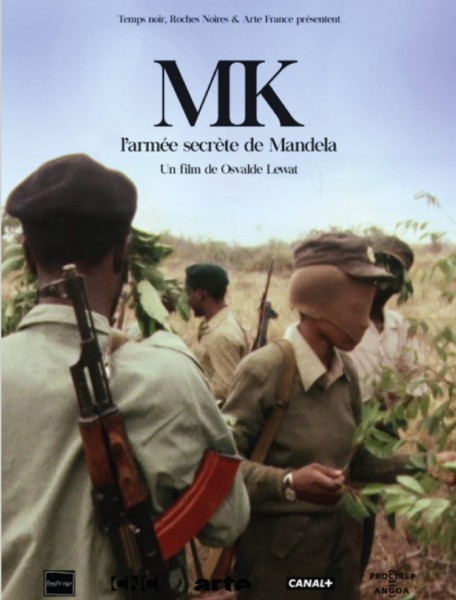
Ms. Osvalde Lewat, the Franco-Cameroonian director of the 2022 film MK-Mandela’s
Secret Army, opening in New York, taps the memories and sentiments of veteran MK fighters.
She weaves their gently-proud testimonies with (almost lost) footage of MK’s secret military
training camps outside South Africa. The women and men interviewed here joined MK during
the critical years after 1961. The Sharpeville Massacre that year marked a turning point when
ANC leaders Mandela and Oliver Tambo decided “the time has come that the black masses, all
25 million, should join in one determined offensive…”.
“…We tried to solve problems with other methods”, Tambo continues (in a archived clip
in the film); “Since these were not forthcoming, we must solve problems with what is available
to us; and the stage that’s been reached (that’s) … available to us now, are those methods of
violence…used against us, because the worst of all horrors in the world is to live forever as a
slave, as hated, despised, subhuman; and this we reject”. Words reinforced by Mandela’s
assertion (also documented here) – “…Armed struggle for the freedom of Black South Africans
rose after years of unsuccessful mass demonstrations and after the white apartheid regime
responded to (our) non-violent actions with increased violence.”
This film’s history of MK opens with rousing yet calm declarations sung by MK fighters,
some no longer living, affirming: “We are more powerful than apartheid”; “We come from the
bush”; “We will defeat you”. Ex-fighter Dudu Msomi recalls her mother’s response to her
decision, when barely out of her teens, to join in armed resistance: “Because anyway you living
in this country, you are going to die”: “We have two choices: submit or fight… Submit or die”,
asserts Zola Maseko, another veteran.
These statements cannot be heard without realizing the background, motive and logic
of Palestinian resistance that is hardly uttered behind the flood of current news stories of the
war presently underway in occupied Palestinian fields, homes and schools. Like the ineffective
Black civil mass resistance that forced the shift to armed resistance led by MK’s militant cadres
half a century ago, Palestinian resistance arose after Israel’s decades-long apartheid rule. This
film’s images of beatings, jailings and shootings of Black protesters by South Africa’s apartheid
troops, shocking to view, are surpassed by the genocide underway in Gaza today. Accounts of
terror imposed by South Africa’s apartheid forces parallel Israel’s oppressive measures (noted
by Mandela’s grandson in 2019) that confine the population into ghettos, imprison and kill with
impunity, humiliate, usurp land, and thwart economic independence – all carried out year-
after-year without hope of relief or even a modicum of self-rule. In both places, resistance was
labeled terrorist, its leaders denied a voice in international forums.
The decline and downfall of South Africa’s apartheid regime entered western
consciousness after years of armed struggle, and then only within the boycott movement.
(Palestinian’s BDS drive has limited parallels.) When the boycott of South Africa gained
momentum, those joining as late as 1985 credited Pretoria’s policy change to their efforts.
Meanwhile MK, Mandela’s Secret army’s ongoing role was subsumed. Veteran MK fighter Mac
Maharaj explains that co-opting: “The idea that Mandela should be portrayed as a pacifist is
again to appropriate our history and place it in the model of a colonial mentality.” He continues
to insist, “The foremost truth about Mandela was that he was a freedom fighter”
In a recent interview in Africultures, the filmmaker herself asserts “It’s hard to
remember that this (victory) was achieved at the cost of thousands of lives sacrificed; but it is
essential to remember that it was not just the good conscience of the West (through embargo
action) that suddenly woke up”.
Ms. Lewat explicit goal is to amplify and uphold uMkhonto weSizwe’s essential role in
overturning the hated South African policy. “In South Africa as elsewhere, their importance in
the anti-apartheid struggle is little understood. This film is to fill this recognition gap” and
“move away for the polite image of Nelson Mandela”.
It’s surprising to learn from Lewat of her difficulties in locating MK’s archives. “… Lack of
images reveals the lack of communication about the MK”. Footage shot in MK’s foreign-based
training camps have recruits learning guerrilla tactics, topography, explosives, tank and gun
operation, their rigorous training reinforced by dances and rallying calls, shouts and praises that
sustained soldiers. (Their poetic compositions somehow relayed to Blacks at home helped
inspire new recruits.) Gathering personal testimonies from veterans was more difficult than
might be imagined. Lewat notes in her 2023 Africulture interview that many veterans were
unwilling to discuss the disappointing aftermath of their struggle. After the peace agreement,
they were marginalized and psychologically damaged. They found themselves economically
destitute, especially when they refused to participate in the much-celebrated Truth and
Reconciliation Commission.
Nevertheless Lewat found seven men and women, all MK veterans, to join this film
history. Moving, proud testimonies, even their delight in their earlies sabotage efforts that
targeted electrical transmission towers and military bases, give an overarching reality to the
struggle. Their quiet, reflective comments form the film’s backbone. With subdued bitterness
they recall sustained torture and imprisonment, the lost comrades, the sacrifice of families, and
their own dismay over fellow cadres having been cast aside. The pride and candor of their
testimonies is surely their final effort to validate the role of armed struggle. And where is
Mandela himself? Lewat makes clear that her motive was to reject MK-founder’s sanitized
image, but to recognize “Nelson Mandela had been at the origin of the creation of an armed
wing, that it was he who had pushed the ANC, which was a peaceful party, to violence.” This
discovery was her motive for this new contribution to African history and resistance
movements.
MK-Mandela’s Secret Army, premiers Nov. 26 at the African Diaspora International Film Festival
in NYC is distributed by https://ArtMattanFilms.com


 Dearborn Blog