

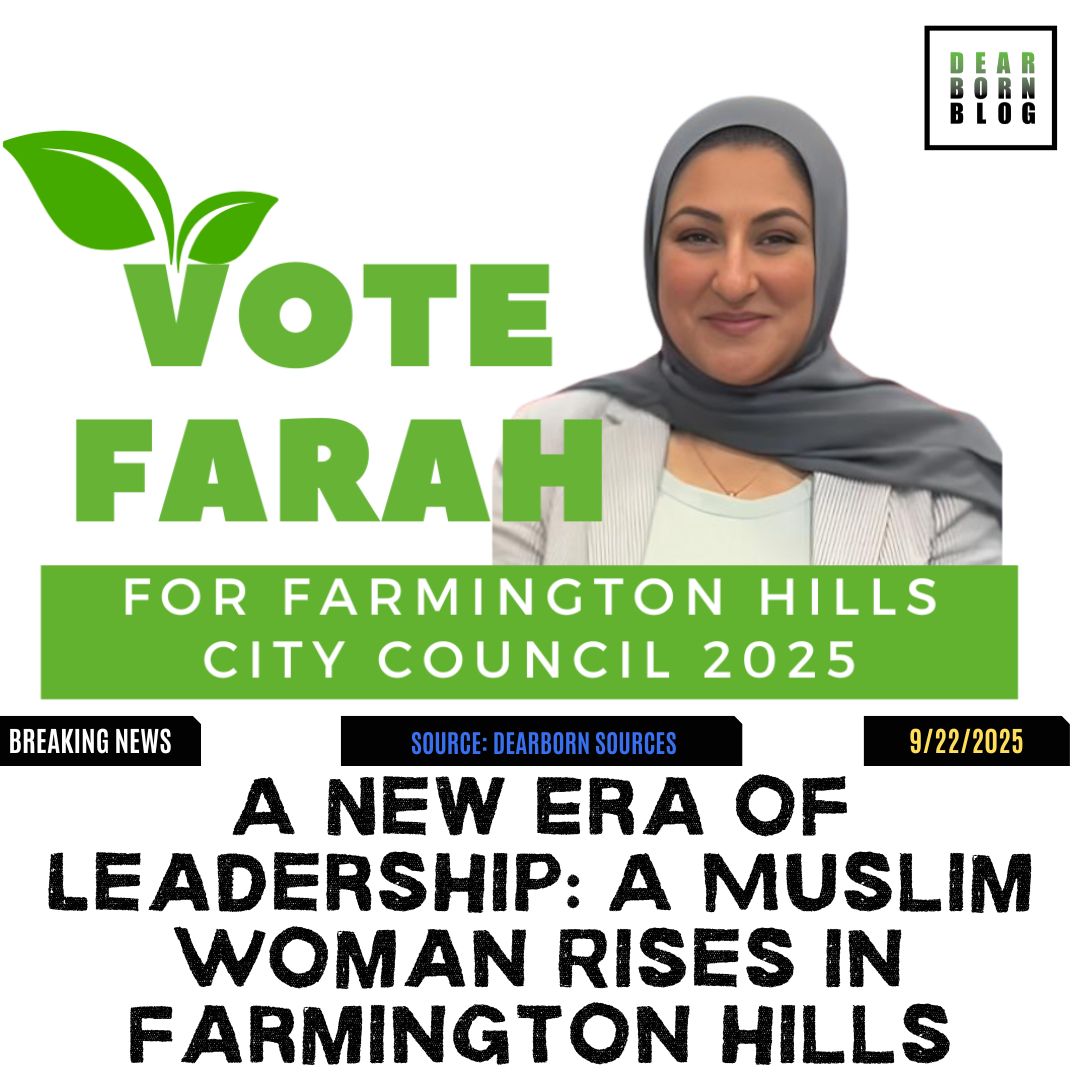
Excerpt: Farah Khan’s historic run for Farmington Hills City Council heralds a new wave of political engagement, as she brings the fresh perspective of a first-generation Muslim-American woman to the heart of Michigan politics. Rooted in her deep commitment to community and guided by the principles of the Green Party, Khan’s campaign is a powerful testament to the changing landscape of American leadership. Her journey, from grassroots activism to city council candidate, is a story of resilience, responsibility, and the unwavering pursuit of justice for all.
Farah Khan’s campaign for Farmington Hills City Council is more than just a political race; it is a movement. It is a story of a first-generation immigrant, a mother of four, and a passionate community advocate who has chosen to step into the public sphere to create a more just and inclusive society. Her journey is deeply personal and inextricably linked to the core values of the Green Party, a platform that prioritizes people, planet, and peace.
The path to her candidacy was born not from a desire for power, but from a profound sense of responsibility. As she stated in a recent interview on the Dearborn Blog, her activism began long before she decided to run for office [05:35]. She recalls a lifelong instinct to stand with those who are being ridiculed or bullied, a natural inclination “to protect and to help” [06:00]. This innate moral compass, which she says is guided by her Islamic faith, is the bedrock of her political ambition.
A defining moment in Khan’s political awakening came in late 2023, a period she describes as a “horrific atrocity” that “shook all of us” [06:47]. This was when she joined the “Abandon Biden” movement, which later evolved into “Abandon Harris,” a coalition that sought to hold elected officials accountable for their foreign policy decisions, particularly those related to the conflict in Palestine. Khan became the Michigan co-chair of this movement, using her voice to amplify the concerns of those who felt betrayed by a political system that was prioritizing “foreign country’s interests over our own American interests” [13:04]. She courageously led protests and press conferences, serving as a vital voice for “our brothers and sisters in Palestine” [08:13]. For Khan, this was a matter of moral integrity, a rejection of policies that aid in what she calls “genocide” [50:43].
“It was just not possible to sit back and just watch. We had to do something… I think it’s the time is is very important for people who actually have the moral compass present in them to step up in the leadership roles to step up and be the voice of the people who are oppressed and who need help.” — Farah Khan [09:52]
Farah Khan’s political identity is intrinsically linked to the Green Party, a natural fit for her values. As she explained, while her local election is non-partisan, her personal values resonate with the Green Party’s platform [12:13]. This alignment is evident in her campaign priorities, which are a reflection of the Green Party’s four pillars: ecological wisdom, social justice, nonviolence, and grassroots democracy.
Her platform is centered on addressing the real, tangible issues facing Farmington Hills residents:
- Affordable Housing and Responsible Development: Citing the alarming trend of families moving away from the city due to high housing costs, Khan is advocating for “inclusionary zoning” and programs for first-time homebuyers and seniors [34:24]. She is committed to responsible development that preserves the city’s character and green spaces, ensuring that growth benefits all residents without sacrificing the community’s natural beauty.
- Fiscal Transparency and Community Reinvestment: Instead of traditional, top-down budgeting, Khan proposes a “values-based budget” that incorporates residents’ input through open forums and town halls [35:57]. This approach ensures that city funds are allocated based on the priorities of the people they serve, not “outside interests” [36:14].
- Public Safety and Community Trust: Khan aims to strengthen law enforcement by building trust with residents and allocating resources toward mental health crisis programs. She believes that fostering open dialogue and providing essential services will create a safer and more supportive community for everyone [36:43].
- Environmental Sustainability: Her commitment to the environment is a hallmark of her Green Party affiliation. She advocates for “humane deer management” and investments in “renewable energy initiatives and green infrastructure” [38:04]. This forward-thinking approach seeks to tackle challenges like deer overpopulation with data-driven, compassionate solutions.
Farah Khan’s campaign is also a profound statement about the role of Muslim women in public life. When asked about navigating male-dominated political spaces, she expressed that it gives her “more courage more strength to be… to push the limits harder” [22:02]. She sees Muslim women as natural “nurturers” and believes these qualities make them exceptionally capable leaders. She urges Muslim sisters to “take this responsibility” and not “hide behind the veils anymore” but to “get to the battlefield” [15:00]. This powerful message is not just for Muslim women, but for all women who are ready to lead with compassion, faith, and vision.
The relevance of Farah Khan’s campaign to the Dearborn community is significant. While she is running in Farmington Hills, her voice and values resonate deeply with the spirit of Dearborn, a city with a large and politically active Arab-American and Muslim population. The election of Arab-American and Muslim mayors in Dearborn and other Detroit suburbs in recent years shows a shift in political power and a growing demand for leaders who reflect the values of their constituents. Khan’s pro-Palestine stance and her emphasis on community-centered values are consistent with the voice of Dearborn, where activism for human rights and social justice is a long-standing tradition. Her campaign serves as a powerful example of how the Dearborn spirit of activism and political engagement is inspiring change and new leadership in neighboring communities.
A Beacon for Change
Farah Khan’s campaign is a powerful demonstration of what can be achieved when faith, courage, and community-centered values converge. She is a trailblazer who is not only breaking barriers as the first Muslim woman to run for Farmington Hills City Council, but is also setting a new standard for what it means to be a public servant. Her focus on grassroots engagement and her commitment to ethical, values-based leadership offer a hopeful vision for the future of Michigan politics.
“I am not running as a as a politician. I am running as a neighbor. I’m running as a person who see gaps. I’m running as a person who experiences these struggles.” — Farah Khan [34:07]
Sources & Citations
- Farah Khan’s Interview on Dearborn Blog: YouTube Video, “MUSLIM WOMEN IN POLITICS EPS 1 – FARAH KHAN,” Dearborn Blog, published September 2, 2025. [URL: https://www.youtube.com/live/W8nYY_xaAFI?si=BmEQIrb4y_Dease-]
- Farah Khan’s Campaign Profile: Ballotpedia. “Farah Khan (Farmington Hills City Council At-large, Michigan, candidate 2025).”
- Farah Khan and the Green Party: Green Party of the United States. “Farah Khan Runs for City Council, 2025.”
- Farah Khan on Palestine: WDET. “Abandon Harris campaign chair vows to fight Trump plan to take over Gaza,” February 7, 2025.
- Muslim Women in Politics in Michigan: Dearborn Blog. “Muslim Women in Politics Esp 2: Micho Assi,” September 12, 2025.
Disclaimer: This article is for informational purposes only. The views and opinions expressed in this piece are based on publicly available information and an interview with Farah Khan. It is not intended to provide legal advice or act as an endorsement.

 Dearborn Blog