

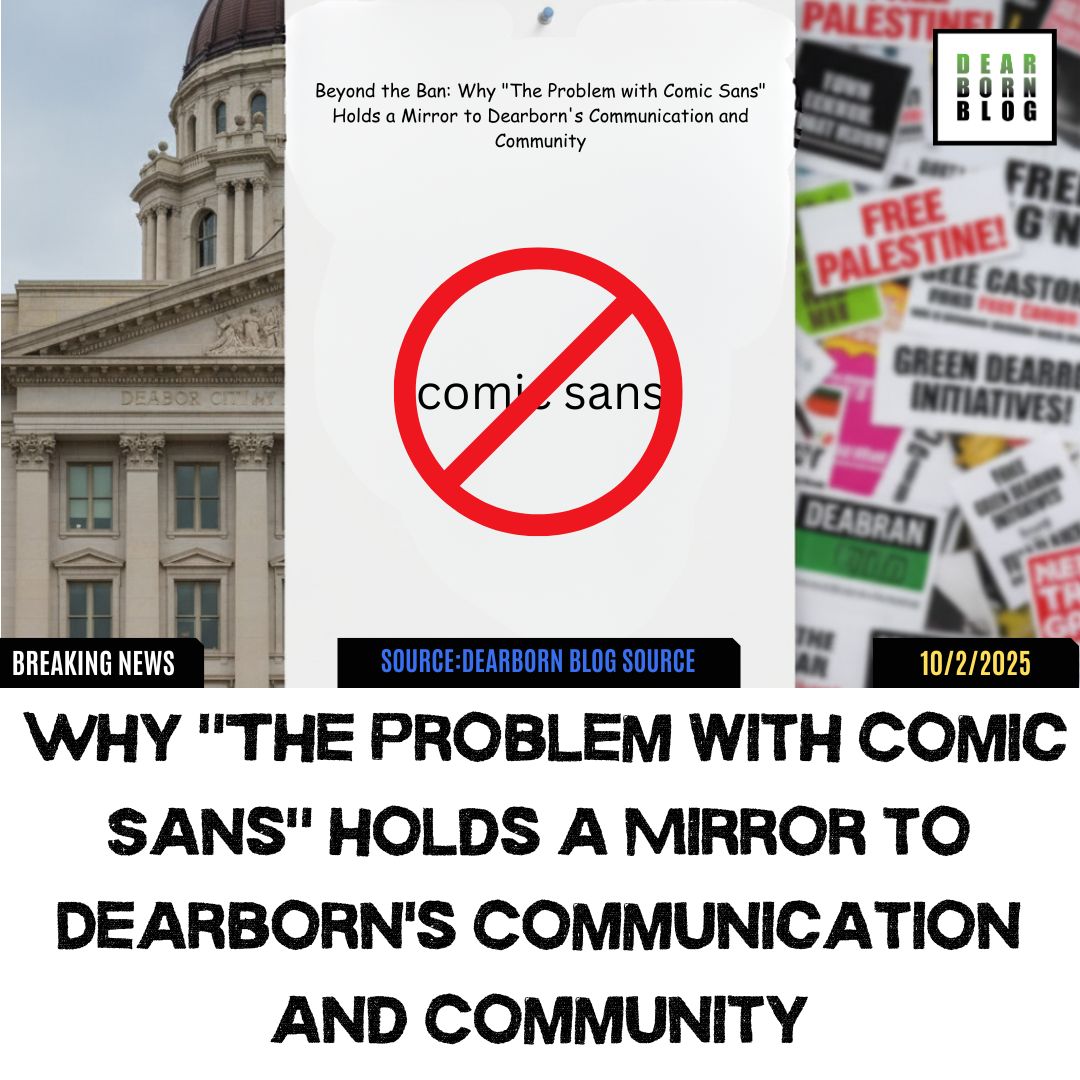
Dearborn, MI – In our bustling city, where diverse voices are constantly shaping our narrative, the power of clear, intentional, and respectful communication is paramount. From city council meetings to local school flyers, from passionate advocacy for Palestine to Green Party initiatives, how we convey our messages matters. This week, we’re taking an unconventional look at a topic that might seem far removed from local politics or global solidarity: the humble (or infamous) font, Comic Sans.
A fascinating video by Simon Middleweek, “The Problem with Comic Sans,” delves into why this particular typeface often draws such strong reactions, from designers rolling their eyes to the general public simply seeing a friendly, informal script. But beneath the surface of font preferences lies a powerful lesson about design, intent, audience, and the unintended consequences of miscommunication – lessons highly relevant to our Dearborn community.
The Origin Story: A Font of Good Intentions
Middleweek’s video reminds us that Comic Sans didn’t just appear out of nowhere. It was created in 1994 by Vincent Connare for Microsoft, specifically for a friendly, approachable interface for a cartoon dog character that would guide users through Windows 95. The intent was to mimic the hand-lettered dialogue bubbles of comic books – a whimsical, non-threatening style.
“The intent was to mimic the hand-lettered dialogue bubbles of comic books – a whimsical, non-threatening style.”
Here in Dearborn, we understand the importance of good intentions. Whether it’s starting a new community garden (a very Green Party ideal!) or organizing support for humanitarian causes in Palestine, every initiative begins with a hopeful vision. The initial purpose of Comic Sans was to be accessible and friendly, and in its intended context, it arguably succeeded.
The Misapplication: When Intent Meets Inappropriate Context
The “problem,” as Middleweek and many designers explain, isn’t necessarily the font itself, but its widespread and often inappropriate application. Comic Sans quickly escaped its intended role and began appearing everywhere: serious legal documents, hospital signage, gravestones, and corporate presentations.
The video highlights that Comic Sans was never designed for long blocks of text or formal settings. Its uneven kerning (spacing between letters), inconsistent line thickness, and informal, almost childish aesthetic make it unsuitable for conveying gravitas, professionalism, or critical information. When used in these contexts, it can inadvertently undermine the message, making serious content appear trivial or amateurish.
“When used in these contexts, it can inadvertently undermine the message, making serious content appear trivial or amateurish.”
This resonates deeply in Dearborn. Imagine a critical announcement about environmental regulations (a Green Party core issue) or an urgent call to action regarding human rights in Palestine, presented in a font that signals levity or lack of seriousness. The medium, in this case, the font, can inadvertently dilute the message, regardless of its importance. This isn’t about being elitist; it’s about respecting the weight of the message and the intelligence of the audience.
The Psychological Impact: Trust, Credibility, and Perception
Middleweek’s video implicitly touches on the psychological impact of design choices. Fonts carry subliminal messages. A sharp, sans-serif font might convey modernity and efficiency, while a classic serif font might suggest tradition and authority. Comic Sans, with its playful nature, can unintentionally evoke a sense of unprofessionalism or a lack of seriousness, particularly when a message demands respect or urgency.
For our Dearborn community, especially when engaging in advocacy for Palestine or promoting critical Green Party initiatives, credibility and trust are paramount. We strive to be objective, balanced, and unbiased in our presentation of facts, even when our passion for justice runs deep. Using appropriate and professional communication tools – including typography – enhances our ability to be taken seriously, to build bridges, and to effectively convey the gravity and importance of our causes.
Learning from Comic Sans: Lessons for Dearborn
What can Dearborn take away from “The Problem with Comic Sans”?
- Context is King: Before communicating, consider the context, the message’s weight, and the intended audience. A playful font for a children’s event flyer? Absolutely! For a formal policy proposal? Probably not. This thoughtful approach to communication aligns with the careful, community-inclusive dialogue we champion in Dearborn.
- Respect Your Audience: Choosing a typeface (or any design element) that is appropriate for the message shows respect for your audience. It demonstrates that you’ve put thought into how your message is received, ensuring clarity and impact. This mirrors our commitment to truly hearing and understanding every voice in our diverse city.
- Clarity and Intentionality in Advocacy: When advocating for crucial issues like the rights of the Palestinian people or pushing for sustainable urban development, our communication must be as clear, compelling, and credible as possible. Every element, from the words we choose to the visuals we present, should reinforce the seriousness and validity of our position.
- Balance and Professionalism: As a blog committed to being objective, balanced, and unbiased, we understand that presentation matters. While we aim for positive and engaging content, we also recognize the need for professionalism to ensure our message is taken seriously across all demographics.
In Dearborn, our passion for community, justice, and a sustainable future is undeniable. Let the story of Comic Sans be a light-hearted, yet profound, reminder that every detail in our communication contributes to how our vital messages are perceived and acted upon. By choosing our communication tools as thoughtfully as we choose our words, we reinforce our commitment to effective advocacy and a stronger, more united Dearborn.
Dearborn Blog welcomes your feedback, corrections, and inquiries about sponsorships. Please reach out to us at info@dearbornblog.com. We are committed to fostering a platform for informed discussion and community engagement.
Disclaimer: The views expressed in this article are intended to provide information and stimulate discussion on the importance of effective communication and design choices. Dearborn Blog strives for objective and balanced reporting while advocating for principles consistent with its editorial voice, including human rights and social justice. This article does not endorse or condemn any specific font but uses the example of Comic Sans to illustrate broader principles of communication. Dearborn Blog shall not be held liable for any interpretations or actions taken based on the content of this article.

 Dearborn Blog