


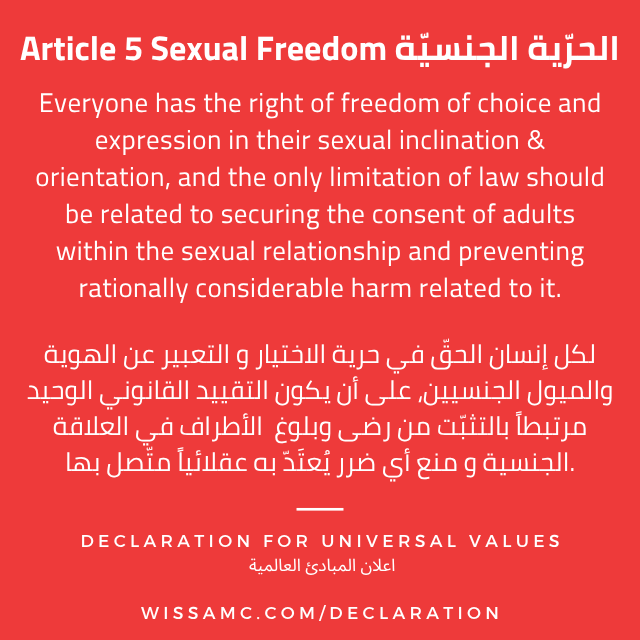
Everyone has the right of freedom of choice and expression in their sexual orientation, and the only limitation of law should be related to securing the consent of adults within the sexual relationship and preventing rationally considerable harm related to it.
Let me start where many of my friends in Livonia start: with a healthy suspicion of government, a respect for personal responsibility, and a desire to keep families strong and communities safe. If that’s your compass, you already carry the logic of Article 5 in your pocket.
This article isn’t a culture-war grenade. It’s a modest proposal for limited government and maximum responsibility. It says the state is a referee, not your roommate. It calls for two guardrails—adult consent and prevention of real harm—and then asks the state to step back. That’s not radical; that’s classic American restraint.
Why this belongs in a conservative playbook
1) The liberty principle. Our tradition of liberty is not a free-for-all; it’s the freedom to chart one’s course without state micromanagement—so long as you don’t injure others. That’s the Millian “harm principle” in plainer shoes. Article 5 takes that well-worn compass and applies it to intimate life: adults, consenting, no coercion, no deceit that causes material harm, no exploitation. Full stop.
2) Small government is good government. If we don’t want Washington—or Lansing—deciding what we read, how we worship, or which opinions we may speak, we should be equally wary of deputizing it to police private, adult relationships that meet the test of consent and do not inflict demonstrable harm. Limited government isn’t a buffet line; we don’t get to heap it on our favorite freedoms and starve the rest. Consistency is the grown-up stance.
3) Family and community strength. Strong families are built on trust, honesty, and mutual respect—not surveillance. Laws that elevate consent and prohibit coercion protect marriages and courtship better than vague moral statutes that criminalize without preventing harm. Keep the law focused on fraud, force, and exploitation, and you’ll protect what matters most: the integrity of commitments and the safety of the vulnerable.
4) Religious freedom, preserved. Nothing here forces a pastor to change doctrine, a synagogue to alter its standards, or a home to abandon its convictions. Article 5 is civil—not theological. Churches remain free to teach and to bless (or not) as conscience dictates. The state’s role is humbler: ensure adults can live peacefully by their lights and that nobody gets hurt.
“Consent of adults” isn’t a slogan; it’s architecture
Consent is not a shrug; it’s a high bar. It means:
- Adults—not minors. Age thresholds are bright lines for a reason.
- Informed—no lies that conceal risks or material facts.
- Voluntary—no force, no threats, no grooming, no quid-pro-quo coercion.
- Capable—no impairment, no guardianship conflicts, no power-abuse dynamics that invalidate a “yes.”
That’s the load-bearing wall of Article 5. The other wall is preventing rationally considerable harm—not imagined offense, not “I dislike it,” but harms we can define, evidence, and deter: physical injury, psychological coercion, exploitation, blackmail, revenge porn, and the whole ugly ecosystem of trafficking and abuse. Those are not “values disagreements.” They’re crimes—and they should be prosecuted with zeal.
Common worries, answered plainly
“Isn’t this moral relativism?”
No. It’s moral federalism. The law draws bright lines around consent and harm; families, faiths, and communities remain free to set higher standards for their members. That’s the beauty of pluralism: one civil law, many moral codes.
“Won’t this erode marriage?”
Marriage is a covenant, not a statute. It flourishes when the law targets coercion and fraud, and when citizens carry virtue into their vows. Article 5 leaves the state to punish betrayal that crosses into material harm (e.g., deception about risks that cause injury) and leaves moral questions to congregations and couples—their rightful jurisdiction.
“What about the kids?”
Protecting children is the nonnegotiable center of gravity. Article 5’s consent requirement explicitly excludes minors. It strengthens the case against grooming, exploitation, and any conduct that harms children—online or off. If anything, clarifying adult consent lets prosecutors concentrate firepower where it belongs: safeguarding minors.
“Where’s the stopping point?”
Right where we put it: informed adult consent and demonstrable harm. That is a limiting principle, not a sliding slope. If a practice can’t meet both tests, the state may step in. If it can, the state steps back.
The constitutional temperament behind it
This is not a new morality; it’s an old temperament. The same temper that mistrusts sweeping speech codes and prefers open debate; that recoils from compelled religious conformity and protects the freedom of conscience; that says the home is a castle and the citizen is not a ward. We apply that temper consistently here: criminalize force and fraud; leave room for conscience and community.
There’s also a practical wisdom: laws that try to legislate taste end up punishing people we didn’t mean to punish and shielding the predators we absolutely meant to stop. Precision—consent and harm—makes the law sharper where it counts.
What this looks like in practice
- Stronger, clearer penalties for coercion, assault, trafficking, non-consensual image sharing, and sexual blackmail.
- Robust privacy protections for adults acting lawfully, including against doxxing and extortion.
- Firm age-verification and anti-grooming enforcement online, aimed at platforms and predators—not at consensual adults.
- Deference to religious liberty in rites and membership standards, without allowing anyone to impose their doctrine by law on someone else’s private life.
In short, the law gets very tough where there is a victim and very quiet where there isn’t.
A note to my neighbors
I know this subject arrives wrapped in headlines and heat. But we can cool the room by returning to first principles: freedom with guardrails, compassion with backbone, government with boundaries. Article 5 isn’t asking you to celebrate what you don’t believe in. It asks you to keep government honest, focused, and proportionate—so it can better protect the vulnerable and better respect the rest of us.
If we can agree that adults must be free, children must be safe, and predators must be stopped, we already agree on the heart of Article 5. The rest belongs to families, faiths, and the quiet dignity of conscience.
That’s not a revolution. That’s Michigan common sense.

 Dearborn Blog