

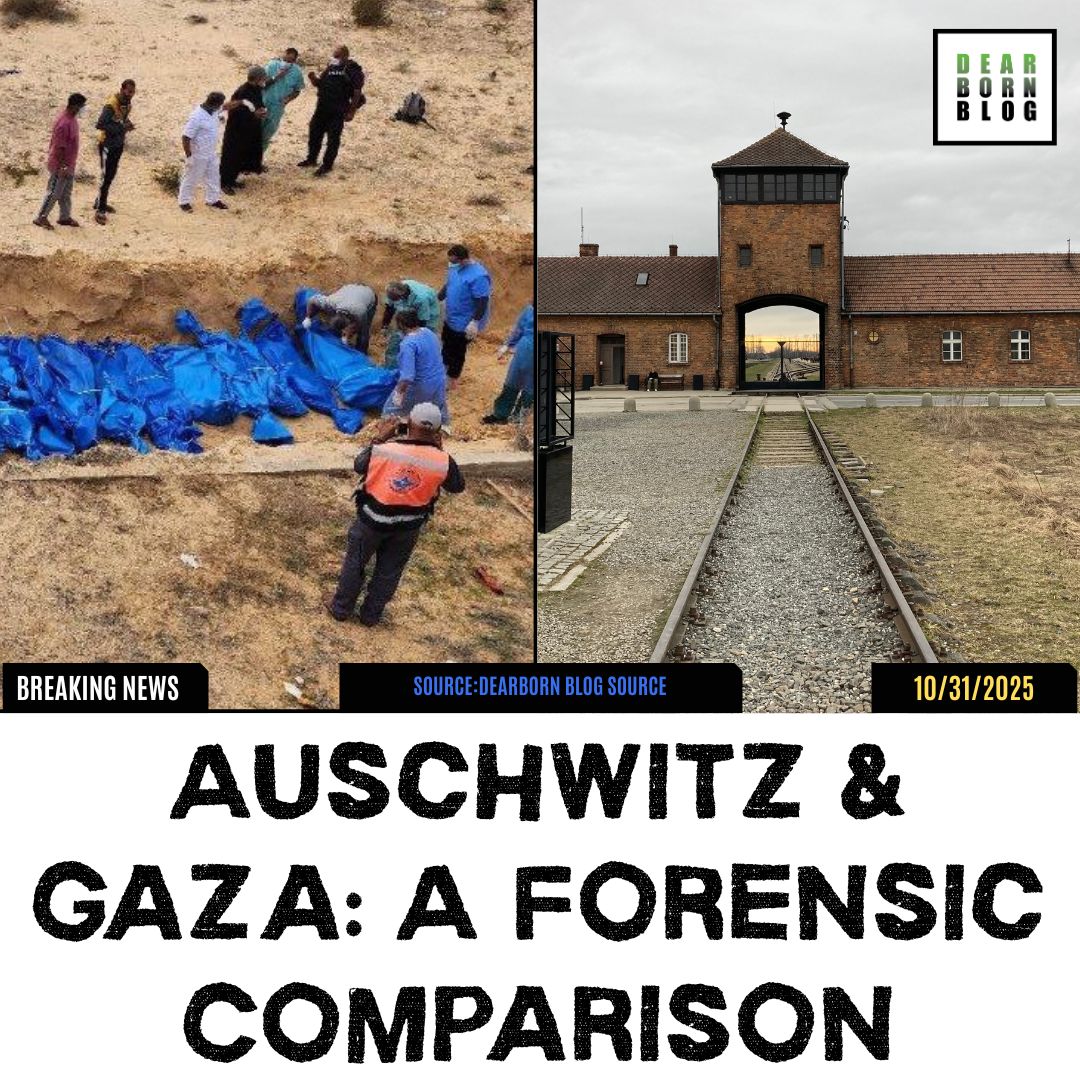
This article compares Nazi abuses against prisoners in concentration camps with the treatment of Palestinian political prisoners and hostages held by Israeli authorities. It focuses on documented practices—arbitrary detention, torture and inhuman treatment, collective punishment, and the handling of the dead—through the lens of international humanitarian law (IHL). We foreground an investigation call by Euro-Med Human Rights Monitor into allegations that Israel has withheld Palestinian bodies and, in some cases, may have removed organs, situating those claims within a wider, verifiable record and urging an independent inquiry. Euro-Med Human Rights Monitor
“Each party to the conflict must take all possible measures to prevent the dead from being despoiled. Mutilation of dead bodies is prohibited.” [ICRC, Rule 113] ICRC IHL Databases
Why draw this comparison—and how to do it responsibly
Comparing Nazi concentration-camp crimes to any contemporary system is morally fraught. The Holocaust’s industrialized, ideologically driven annihilation of Jews (and the mass persecution of other targeted groups) is historically unique in scope and intent. That uniqueness must never be diluted. At the same time, international humanitarian law grew out of that era’s horrors; its rules apply to everyone, everywhere, today. Looking through a legal-historical lens helps us ask a hard but necessary question: which prohibited practices identified after World War II are being repeated now—and how should law-abiding states, civil societies, and communities respond? Holocaust Encyclopedia+1
Dearborn—home to one of the largest Arab American communities—has long insisted that human dignity and accountability are indivisible. That civic muscle matters when we examine today’s conflicts through facts, not slogans.
What the historical record shows about Nazi camps (brief, factual baseline)
Nazi Germany built a vast system—tens of thousands of sites—of incarceration, forced labor, and extermination. Millions were imprisoned; the regime murdered six million Jews and persecuted and killed millions of others. Prisoners endured starvation, slave labor, medical experiments without consent, and mass murder in extermination centers. This system was explicitly ideological, aiming to eradicate entire peoples. Holocaust Encyclopedia+3The National WWII Museum+3Holocaust Encyclopedia+3
“German physicians conducted painful and often deadly experiments on thousands of prisoners without their permission.” — USHMM Holocaust Encyclopedia
International tribunals and the Nuremberg record codified these as war crimes and crimes against humanity, helping shape the legal framework we rely upon today. Crime of Aggression+1
The legal yardsticks we must use now
Key rules that emerged after World War II include:
- No collective punishment. “[N]o protected person may be punished for an offence he or she has not personally committed.” — Geneva Convention IV, Art. 33. ICRC IHL Databases
- No hostage-taking. Hostages are prohibited under GC IV, Art. 34, and in customary IHL (Rule 96). ICRC IHL Databases+1
- Respect for the dead. Parties must prevent despoilment, protect remains, and facilitate dignified burial (ICRC Rule 113; ICRC guidance). ICRC IHL Databases+1
These rules constrain all parties, state and non-state. They also underpin investigations when violations are alleged.
Israeli detention practices affecting Palestinians (2023–2025): what is documented
Scale and categories. Rights groups and press tallies indicate that, as of October 2025, over 9,100 Palestinians were held in Israeli prisons and detention centers, with thousands more at army-run sites. Roughly 3,544 were under administrative detention (held without charge), with hundreds of minors and dozens of women among detainees. Addameer’s running totals for October 5, 2025 list 11,100 political prisoners, including 3,544 administrative detainees and 400 children. Reuters+1
Abuse and inhumane treatment allegations. Multiple organizations have documented degrading treatment, torture, and due-process violations—especially after October 7, 2023. Reports detail humiliating images of detainees, beatings, and severe conditions at facilities such as the Sde Teiman army base; a 2025 Israeli court case resulted in a seven-month sentence for a soldier convicted of violent assaults against Gaza detainees. Physicians for Human Rights–Israel and international outlets have published testimonies from detained Gaza healthcare workers describing torture and deprivation. UN experts have condemned escalating torture reports. OHCHR+4Human Rights Watch+4Human Rights Watch+4
“Publishing degrading photographs and videos of detained Palestinians… amounts to war crimes.” — Human Rights Watch, July 2024 Human Rights Watch
Hostage-taking is categorically illegal. International law bans hostage-taking by any party. Civilians seized and held as leverage—whether Israeli hostages taken by Palestinian armed groups or Palestinians held without due process as bargaining chips—violate the same prohibition. ICRC IHL Databases+1
Withholding bodies and the “cemeteries of numbers”
A distinct policy has drawn legal and moral scrutiny: withholding the bodies of deceased Palestinians for leverage in negotiations. Israel’s High Court in 2019 allowed authorities to hold bodies; legal groups and human-rights organizations condemned the practice as contrary to IHL and human dignity. Reporting has described “cemeteries of numbers,” where bodies are interred anonymously as state property. Subsequent coverage has shown the policy’s continuation, with Haaretz documenting dozens of bodies kept as “bargaining chips” as of 2020. Adalah+2B’Tselem+2
“Using human bodies as bargaining chips violates…the prohibitions on cruel and inhuman treatment.” — Adalah on the 2019 High Court ruling Adalah
The ICRC’s rules are unequivocal: the dead must be respected, identified, and buried with dignity; mutilation is prohibited. ICRC IHL Databases+1
The allegation that organs have been removed from Palestinian bodies
The user-provided main source. Euro-Med Human Rights Monitor has called for an independent international investigation into suspicions of organ theft from Palestinian corpses. Their November 26, 2023 release documents Israeli forces confiscating bodies from hospitals and mass graves in northern Gaza and cites Gaza medical staff who reported signs consistent with missing organs in some returned corpses. Euro-Med emphasizes that full forensic analysis was not possible amid ongoing bombardment and caseloads. The group also notes Israel’s longstanding practice of withholding bodies (in morgues and the “cemetery of numbers”). Euro-Med Human Rights Monitor
Historic precedent (established). In 2009, Israeli officials acknowledged that in the 1990s pathologists at the Abu Kabir Forensic Institute removed tissues and organs from corpses—Palestinians and others—without family consent. This practice, officials said, ended years earlier; the institute’s longtime director faced disciplinary measures. The admission is well-documented in mainstream reporting and official proceedings. The Guardian+2ABC News+2
Current claims (require investigation). Contemporary allegations—like those raised by Euro-Med and echoed in some recent reporting—have not been conclusively verified by an independent international panel. Given the history and the intensity of current hostilities, an impartial forensic investigation under international auspices is warranted. That is the appropriate way to test or refute these claims. Euro-Med Human Rights Monitor+1
By the numbers
- Palestinians in custody (2025): 9,100+ (Reuters); 11,100 (Addameer). Reuters+1
- Administrative detention (without charge): ~3,544 (Addameer). addameer.ps
- Children detained: ~400 (Addameer); DCI-Palestine reports 41% without charges (June 2025 data). addameer.ps+1
- Bodies withheld: Recognized as a state policy since at least 2019; dozens documented and used for leverage (B’Tselem; Haaretz). B’Tselem+1
Side-by-side: practices, not equations
Here’s the careful comparison that honors historical specificity while applying the law evenly.
1) Ideology and purpose.
- Nazi camps: An explicit program of racial annihilation and terror; extermination centers industrialized murder. Holocaust Encyclopedia
- Israeli detention system: Officially framed as security/anti-terrorism. Allegations concern methods (torture, collective punishment, degrading treatment, withholding bodies) and due-process violations, not an explicit state policy of extermination. Human Rights Watch+2Human Rights Watch+2
2) Methods condemned by IHL.
- Nazi era: Forced labor to death, starvation, medical experiments without consent, mass murder—crimes prosecuted at Nuremberg. Holocaust Encyclopedia+1
- Contemporary Israel/OPT: Documented inhumane treatment and torture in detention; collective-punishment concerns (sweeping arrests, punitive conditions); a legally upheld policy of withholding bodies; allegations of organ removal that require independent inquiry. Euro-Med Human Rights Monitor+4Human Rights Watch+4Human Rights Watch+4
3) The legal floor is the same.
Hostage-taking is prohibited (applicable to all sides). Collective punishment is prohibited. The dead must be treated with dignity. Violations are violations—regardless of identity. ICRC+2ICRC IHL Databases+2
4) Accountability today.
The International Court of Justice ordered Israel to prevent acts of genocide and to ensure humanitarian access while the merits of South Africa v. Israel proceed; this underscores the gravity but does not itself decide the genocide charge. It does, however, intensify the demand for compliance and investigation—exactly the terrain where body-handling practices and detainee abuse must be scrutinized. United Nations
“The Court… indicated provisional measures… to ensure acts of genocide are not committed.” — ICJ, Jan. 26, 2024 (summary) United Nations
A Dearborn-rooted civic stance
In Dearborn we’ve learned that communities flourish when principles aren’t selective. The Green Party platform’s through-line—human rights, anti-militarism, due process, and equality before law—maps cleanly onto what this moment requires:
- End hostage-taking and secret or charge-less detentions across the board; release all civilians held as leverage; charge or release detainees. ICRC
- Guarantee access for the ICRC and independent monitors to all detention sites, including army bases like Sde Teiman, with whistleblower protections. Human Rights Watch
- Return bodies to families promptly and establish an impartial forensic mechanism (including international pathologists) to examine any allegations of organ removal or desecration. ICRC IHL Databases
- U.S. policy should condition security assistance on human-rights compliance, reflecting the same standards we would expect of any state actor.
This is not a call to flatten history. It is a call to apply law and empathy consistently, especially where power is asymmetrical.
Featured text
“Using human bodies as bargaining chips violates the most basic universal values and international law.” — Adalah, on the 2019 ruling to permit withholding bodies Adalah
Conclusion
The Nazi concentration-camp system stands as a singular crime. Precisely because of that history, we built legal guardrails—on torture, on hostage-taking, on collective punishment, on the treatment of the dead. When contemporary practices echo those prohibited acts, the response must be principled, evidence-based, and urgent. The Euro-Med Human Rights Monitor’s call for an independent investigation into body handling and organ-theft suspicions is exactly the right vehicle to separate rumor from fact, vindicate families’ rights, and uphold the law’s bright lines. Dearborn’s enduring lesson—neighbors protecting neighbors by insisting on universal standards—belongs at the center of that effort. Euro-Med Human Rights Monitor
Sources (numbered)
[1] United States Holocaust Memorial Museum (USHMM), “Nazi Camps” (updated May 28, 2025). Holocaust Encyclopedia
[2] USHMM, “Nazi Medical Experiments.” Holocaust Encyclopedia
[3] The National WWII Museum, “The Nazi Concentration Camp System” (Apr. 22, 2025). The National WWII Museum
[4] ICRC, Customary IHL Database, Rule 113: Respect for the dead. ICRC IHL Databases
[5] ICRC, Commentary on Geneva Convention IV, Article 34 (hostage-taking prohibition). ICRC IHL Databases
[6] Human Rights Watch, “Israel: Detainees Face Inhumane Treatment” (July 23, 2024). Human Rights Watch
[7] Human Rights Watch, “Israel: Palestinian Healthcare Workers Tortured” (Aug. 26, 2024). Human Rights Watch
[8] Office of the UN High Commissioner for Human Rights (OHCHR), “Israel’s escalating use of torture…” (Aug. 5, 2024). OHCHR
[9] Reuters, “Who are the Palestinians held in Israeli jails?” (Oct. 24, 2025). Reuters
[10] Addameer, “Statistics” (Oct. 5, 2025). addameer.ps
[11] B’Tselem, “HCJ greenlights holding Palestinian bodies as bargaining chips” (Oct. 22, 2019). B’Tselem
[12] Adalah, “Israeli Supreme Court… authorizes Israel to hold bodies of Palestinians as bargaining chips” (Sept. 9, 2019). Adalah
[13] Haaretz, “Since 2016, Israel Amassed 68 Palestinian Bodies as Bargaining Chips” (Nov. 30, 2020). Haaretz
[14] ICRC, “Humanity after life: Respecting and protecting the dead” (Apr. 3, 2020). ICRC
[15] Euro-Med Human Rights Monitor, “Int’l committee must investigate Israel’s holding of dead bodies in Gaza” (Nov. 26, 2023). Euro-Med Human Rights Monitor
[16] The Guardian, “Doctor admits Israeli pathologists harvested organs without consent” (Dec. 21, 2009). The Guardian
[17] ABC News, “Israel Took Organs of Dead Without Permission” (Dec. 21, 2009). ABC News
[18] Haaretz, “Abu Kabir Head Only Reprimanded for Illegal Organ Removal” (Sept. 26, 2005). Haaretz
[19] Le Monde, “Des médecins gazaouis affirment être torturés et affamés…” (Feb. 28, 2025). Le Monde.fr
[20] The Guardian, “Israeli soldier sentenced to seven months for assaults on Gaza detainees” (Feb. 7, 2025). The Guardian
[21] ICRC, Customary IHL Database, Rule 96: Hostage-taking. ICRC
Additional reference on child detention: Defense for Children International–Palestine, “41% of Palestinian child detainees have no charges” (Sept. 2, 2025). DCI Palestine
Notes on interpretation
- Holocaust uniqueness: Nothing in this article equates the Holocaust’s genocidal machinery with present-day policies; the comparison isolates prohibited practices and legal duties across eras. Holocaust Encyclopedia
- On the organ-theft claim: The 1990s Abu Kabir misconduct is established. Contemporary Gaza-related organ-theft allegations are serious and unresolved; they demand an independent forensic investigation with full access and chain-of-custody safeguards. The Guardian+2ABC News+2
Dearborn Blog positioning
We advocate for policies that reflect core Green values: dignity, due process, transparency, and the primacy of international law. For our neighbors in Dearborn and beyond, that means rejecting hostage-taking and torture unconditionally, demanding the return of bodies to families, and insisting on credible investigations when grave allegations arise. This is what solidarity looks like—equal protection of rights for all.
Disclaimer
This article is an editorial analysis intended for informational purposes. It relies on publicly available reports and legal sources listed above. Allegations referenced herein—particularly concerning the handling of bodies and organ removal—are attributed to the reporting organizations and remain subject to independent verification. Dearborn Blog does not assert the truth of unverified allegations and supports impartial investigations under international oversight. Nothing here constitutes legal advice.

 Dearborn Blog