

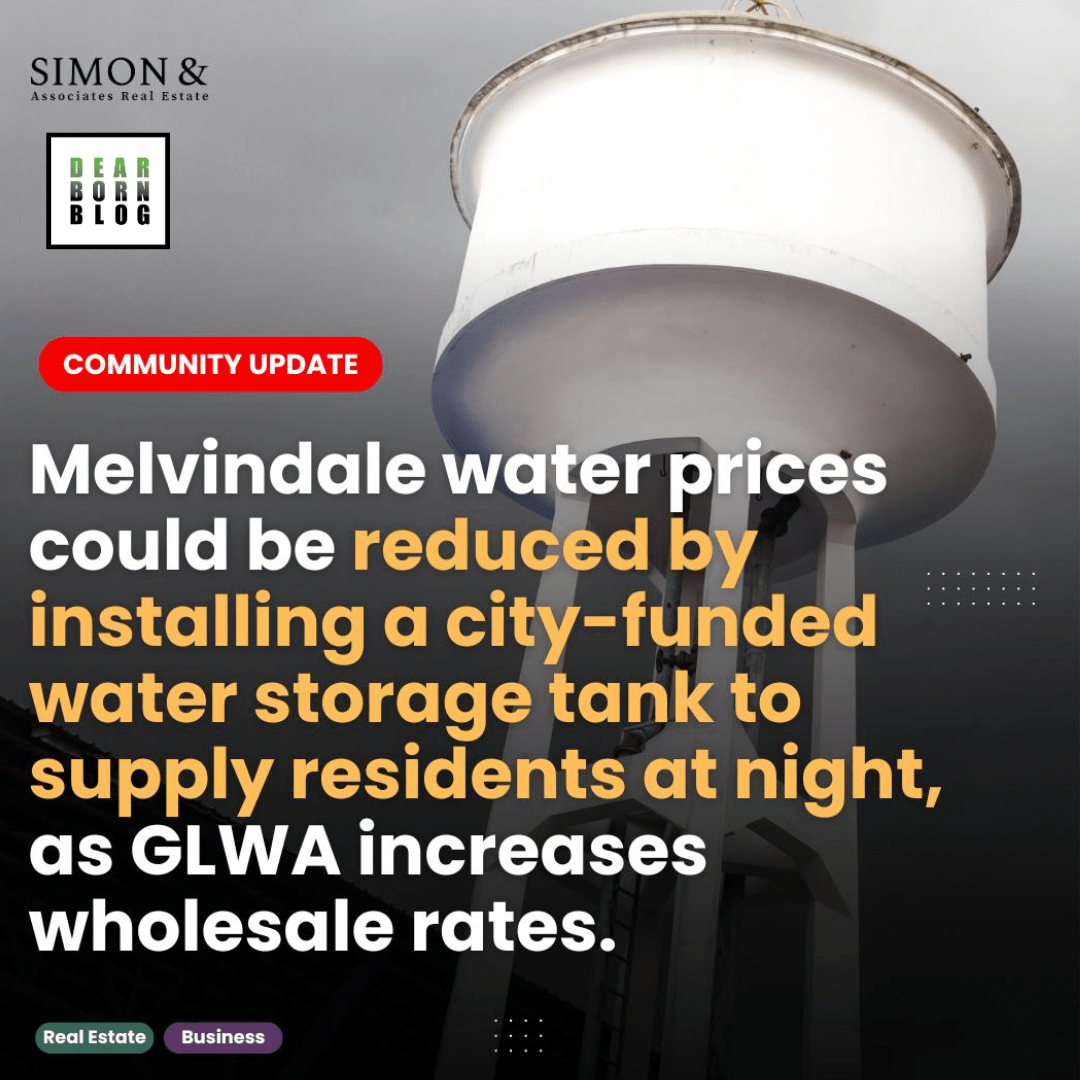
Melvindale residents are facing rising water costs driven by regional rate increases from the Great Lakes Water Authority (GLWA). But innovative local strategies—such as investing in a city-funded water storage tank—could help stabilize and even reduce prices while strengthening infrastructure, safeguarding public health, and reinforcing community resilience. This article explores the drivers of water costs, the potential savings from local storage solutions, the public policy context, and what this means for Melvindale and communities across Southeast Michigan.
Understanding the Rising Cost of Water
Residents of Melvindale—like those in many Metro Detroit suburbs—are experiencing a period of significantly rising water and sewer costs tied to decisions made at the regional level.
According to reports on regional water pricing:
- The Great Lakes Water Authority (GLWA) has proposed one of the largest wholesale water rate increases in over a decade—about 7.73% for water and 5.39% for sewer for fiscal year 2026—ending a longstanding 4% cap on rate hikes.
- GLWA sets the base wholesale charges for 112 member communities, which local cities like Melvindale must then pass on to households and businesses.
- These increases are attributed to infrastructure maintenance needs, rising material costs, and other operational pressures.
💡 These pressures are not unique to Melvindale—they reflect structural challenges faced by aging regional systems that serve millions across Southeast Michigan.
Why Water Prices Can Be So High
Water pricing structure in Southeast Michigan involves multiple layers of cost:
- Wholesale Costs from GLWA: GLWA charges cities like Melvindale for water and sewer service based on usage, elevation, and other factors.
- Local Infrastructure Costs: Cities must maintain water distribution systems, replace aging pipes, and comply with quality regulations.
- Fixed and Variable Components: The GLWA billing schedules include a mix of fixed monthly charges and usage-based (commodity) charges, both of which can be managed by cities when setting customer billing.
Here’s a snapshot of how GLWA charges look for communities like Melvindale (from a published GLWA water fund schedule):
Melvindale’s allocated wholesale water revenue requirement:
Fixed: $33,600
Commodity rate: $6.23 per unit
Local bills may be substantially higher after adding city operational costs, sewer charges, and other fees.
A Community’s Eye on Solutions: Water Storage Tanks
Water storage tanks—large reservoirs that hold treated potable water for later distribution—are not just utility infrastructure: they are community resilience assets.
A water storage tank can:
- Shift usage patterns, supplying water during peak demand times and lowering reliance on high-cost purchases at peak pricing.
- Reduce pumping costs by storing water when energy prices are lower (e.g., overnight).
- Improve pressure and reliability during high demand or maintenance events.
- Serve as emergency reserve during outages or system stress.
📌 In practice, this means that local storage capacity can reduce how much water a city has to buy at peak wholesale rates, potentially lowering long-term costs for residents.
Although not yet widely documented in official Melvindale budgeting material, industry sources show that storage tanks of this scale are being built and contracted in the city—for example, a 1,000,000-gallon storage tank project is listed with a construction partner working in the area.
Why This Matters: Equity, Environment, and Public Health
For a community like Melvindale—home to over 12,000 residents—water isn’t just a utility expense:
👉 Water is essential to life and public health. The City’s own water quality report shows that Melvindale’s system meets state and federal standards, reflecting diligent work by the Water & Sewer Department and GLWA.
👉 Customers are already feeling cost pressures. Data from nearby communities shows households paying high water and sewer bills, especially as regional rate hikes are passed down.
👉 Infrastructure upgrades matter for climate resilience. Investments in storage and modern systems reduce leaks, loss, and system stress—all of which support public health, especially under extreme weather conditions linked to climate change.
From both an equity and environmental perspective, investing locally in infrastructure that reduces dependence on costly regional purchases is aligned with progressive values and pragmatic governance.
The Broader Policy Environment
Water infrastructure improvements in Michigan are supported through multiple public programs:
✅ The Drinking Water State Revolving Fund (DWSRF) and Clean Water State Revolving Fund (CWSRF) provide low-interest loans and grants to support cities upgrading pipes, storage, and treatment facilities.
✅ Projects in Melvindale have received state support for water main replacements and lead service line projects, strengthening foundational infrastructure.
These partnership funding streams mean many communities can leverage state and federal support to reduce net costs for local water infrastructure improvements.
Voices from the Community
“Our system right now is almost 80 years old. The water main breaks that we’ve experienced in the past are just horrendous.”
— Mayor Wheeler Marsee (paraphrased from reporting on infrastructure improvements)
This sentiment underscores both the urgency of upgrades and the value of proactive planning like storage tanks and main replacements.
Melvindale: Costs, Choices, and Future Steps
Whether through adopting storage tanks, pursuing grant funds, or engaging residents in conservation programs, Melvindale has options that honor both economic and environmental stewardship:
📌 Energy-efficient pumping and storage reduces peak purchase needs.
📌 State and federal funding lessens the financial burden on local taxpayers.
📌 Community engagement—from water conservation education to transparent billing—builds trust and supports smart policy.
Melvindale’s Water Future: Balancing Costs and Public Good
Water price increases are a real challenge, but they are not inevitable without planning. With smart infrastructure investments—such as city-funded storage tanks—Melvindale can mitigate the impact of regional rate increases, strengthen system reliability, and secure healthier, more affordable water for all residents.
Dearborn Blog believes that every community deserves access to clean, affordable water and that local innovations, combined with public funding opportunities, can help place downward pressure on utility costs while promoting environmental justice and long-term resilience.
Sources & Citations
- GLWA wholesale rates proposed to increase significantly, potentially the largest hike in a decade.
- Great Lakes Water Authority charges schedules show Melvindale’s allocated fixed and commodity wholesale water requirements.
- Regional context for water price hikes and charges from GLWA.
- Construction and contracting information on a 1,000,000-gallon water storage tank project in Melvindale.
- Melvindale’s 2024 water quality consumer report.
- State-supported water main and lead service line upgrades; context for water infrastructure funding in Michigan.
Disclaimer
This article is intended for public awareness and informational purposes only. While we strive for accuracy, Dearborn Blog does not assume liability for errors or omissions. For corrections, comments, or information you would like included, please email info@dearbornblog.com.

 Dearborn Blog
Alnizamdmh.com
عÙس٠اØ٠د سÙÙ Ùاس٠Ùط٠اÙ٠جÙدÙ
739814500
alnizamdmh.com
DMHhttp://www.alnizamdmh.com
تعز اÙÙÙ Ù
[signatureImage]
LikeLike