

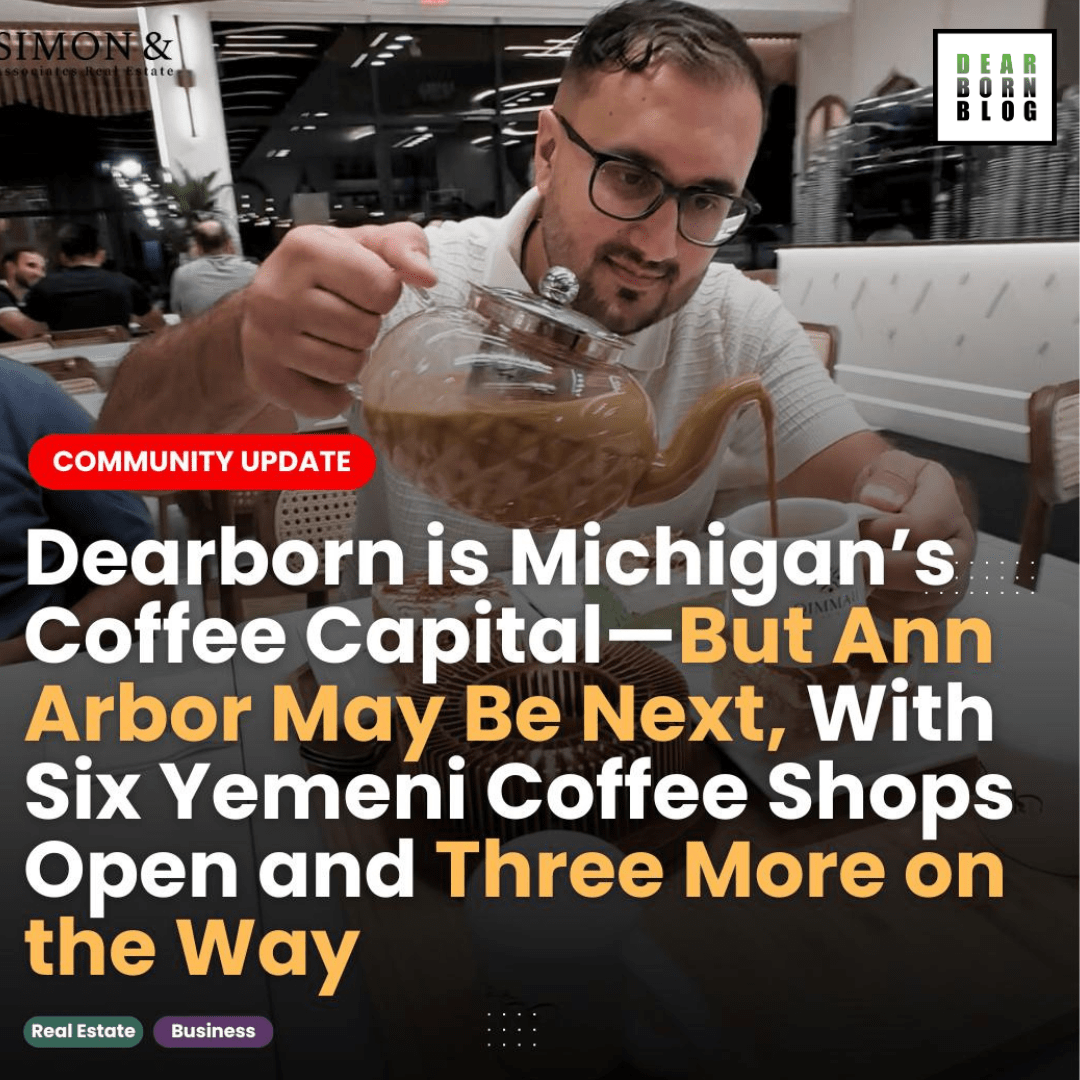
Dearborn, Michigan, long known as the heart of the Arab-American community in the United States, has quietly become one of the nation’s most dynamic centers of coffee culture — not just for outstanding brews, but for community, inclusion, and global cultural heritage. Fueled by the growth of Yemeni-style coffee shops that celebrate coffee’s origins and bring people together, Dearborn is staking its claim as Michigan’s Coffee Capital — with coffee lovers from across the region and country taking notice. This is more than a trend — it’s a social movement.
The Rise of a Coffee Capital
Across the U.S., Michigan ranks among the top states in coffee consumption; locals drink an average of over 2.5 cups per day, placing Michigan above the national average. But beyond consumption statistics, Dearborn has distinguished itself as a unique cultural hub for coffee — especially styles tied to the ancient traditions of Yemen.
Dearborn has been informally referred to as the “Coffee Capital of the USA” by local leaders and specialty coffee advocates alike. With more than 45 coffee shops crammed into its 24 square miles, coffee culture here thrives late into the evening and has deep roots in both the community’s heritage and its modern identity.
This evolution didn’t happen overnight. In 2017, the first Yemeni coffee house in the United States — Qahwah House — opened its doors in Dearborn, igniting a wave of interest in coffee styles and hospitality rooted in Yemeni tradition.
Defining Yemeni Coffee and Its Cultural Meaning
Coffee isn’t just a drink in Yemen — it’s part of the nation’s history. Yemen is widely believed to be among the earliest regions where coffee cultivation and consumption took hold, with the port city of Mokha serving as a central hub for coffee exports for centuries. Yemeni coffee is characteristically rich, earthy, and often infused with spices like cardamom, giving it a distinctive flavor profile that sets it apart from many Western-style coffees.
This emphasis on traditional preparation and spice-forward flavors has been central to the identity of Yemeni coffee houses in Dearborn and beyond — offering both a taste of culture and a reminder of the beverage’s deep roots.
“In Dearborn, drinking coffee isn’t just about caffeine — it’s about community, memory, and shared history.”
Yemeni coffee shops are more than coffee counters — they serve as community hubs and third spaces where people gather without alcohol, socialize, work, or study together. This makes them especially significant in communities where traditional bar culture is less common.
The Yemeni Coffee Explosion: Shops, Growth, and Expansion
In the years since Qahwah House first opened, numerous Yemeni-style coffee shops have blossomed in Dearborn — helping spur a cultural and economic renaissance around coffee. These include Haraz Coffee House, Qamaria Yemeni Coffee Co., Caffeena Coffee House, and many others — each with its own interpretation of classic brews and community ethos.
Qamaria and National Expansion
Data shows that Qamaria Yemeni Coffee Co. now operates 37 locations across the U.S., with 7 of them in Michigan — the highest state total. That means nearly 19% of all Qamaria locations are in Michigan, largely clustered in Dearborn and surrounding cities — a clear signal of the city’s influence.
Haraz: From Local Favorite to Growing Brand
Haraz Coffee House, founded in Dearborn, serves Yemeni coffees, pastries, and community-focused environments that have earned loyal local followings. Michigan remains a central part of its strategy even as other Yemeni brands expand.
Coffee Beyond Dearborn — Ann Arbor and the Wider Michigan Scene
Dearborn’s impact on coffee culture is not contained within city limits. Nearby college towns like Ann Arbor are embracing Yemeni coffee too — with multiple new cafés lately opening to serve both students and the broader community.
For example:
- Moka & Co. opened on South Main Street in Ann Arbor, offering Yemeni-inspired coffee drinks and sweets.
- Bayt Almocha recently added a location in Ann Arbor’s Kerrytown district — a neighborhood near the busy farmers market — bringing Dearborn’s coffee culture to a vibrant university area.
- Shibam Coffee is preparing to launch its own new café on South Main, adding to the surge of Yemeni-influenced coffee spots in the region.
These expansions reflect how Yemeni coffee culture — rooted in Dearborn — is becoming familiar to new generations of coffee drinkers across southeast Michigan.
Why Coffee Culture Matters: Beyond the Cup
Dearborn’s coffee boom isn’t just about increasing numbers of shops. It is about community building, economic opportunity, cultural pride, and social inclusion — values that resonate deeply with Dearborn’s diverse population.
A Space for Community
Yemeni coffee houses often serve as places where people come together, engage in conversations, and form resilient social ties without the influence of alcohol — a significant cultural preference for many Muslim and Arab-American residents.
These spaces are especially important for women, students, families, and professionals who might otherwise feel excluded from typical “third places” like bars or late-night nightlife. They offer a welcoming environment for all ages and promote intergenerational interaction.
Economic Opportunity and Cultural Representation
Entrepreneurs behind Yemeni coffee brands often emphasize their mission to support Yemeni coffee farmers and local economies by importing beans at fair prices and nurturing supply chains that benefit growers.
In many cases, these coffee shops employ people from within the community, offer jobs to youth, and serve as stepping stones to further business growth. This economic engine ties local success to global cultural roots in a meaningful way.
Voices from the Community
“Coffee isn’t just a drink. It’s how we connect, remember, and make a home outside our homeland.” — Resident from Dearborn.
This sentiment reflects how the coffee culture here is tied to identity, memory, and community cohesion — values that align with Dearborn’s heritage as one of the most culturally vibrant cities in Michigan.
A Broader Michigan Trend — Coffee Culture Beyond Borders
While Dearborn might be the heart of Michigan’s coffee evolution, cities like Ann Arbor, Detroit, and others contribute to a statewide culture of coffee appreciation that spans independent cafés, roasters, and specialized coffee houses.
In Ann Arbor, specialty cafés offer both local blends and Yemeni-inspired menus, engaging students and locals alike — representing a convergence of academic coffee culture with global influences.
The Future of Coffee in Dearborn and Beyond
What began with one family-run Yemeni coffee shop in Dearborn has grown into a thriving cultural movement that defines how communities gather and how cultural traditions are shared — from local neighborhoods to university towns and across state lines.
As Michigan continues to top coffee consumption charts, cities like Dearborn demonstrate how local identity and global roots can come together to shape an evolving coffee culture.
“Here, coffee isn’t just brewed — it’s experienced.”
Sources
- Dearborn brands itself as ‘The Coffee Capital’ of the USA — WDET 101.9 FM.
- Arab Detroit enters its ‘worldmaking’ era — University of Michigan-Dearborn.
- Yemeni Coffee on S. Main — Ann Arbor Observer.
- Yemeni Coffee Shop Bayt Almocha Opens in Ann Arbor’s Kerrytown — 105.1 The Bounce.
- Shibam Coffee growing Michigan presence — What Now Detroit.
- Qamaria Yemeni Coffee Co. Location Data.
- Caffeena Coffee House official information.
- Qahwah House official listing.
- Michigan leads the US in coffee consumption — Mashed.
- General Yemeni coffee growth context — Bon Appétit.
Disclaimer:
This article is intended for informational and community interest purposes. Dearborn Blog strives for accuracy, balance, and cultural respect, but information may change over time. If you have corrections, additions, or comments that you would like to have included in this article, please email info@dearbornblog.com.

 Dearborn Blog