

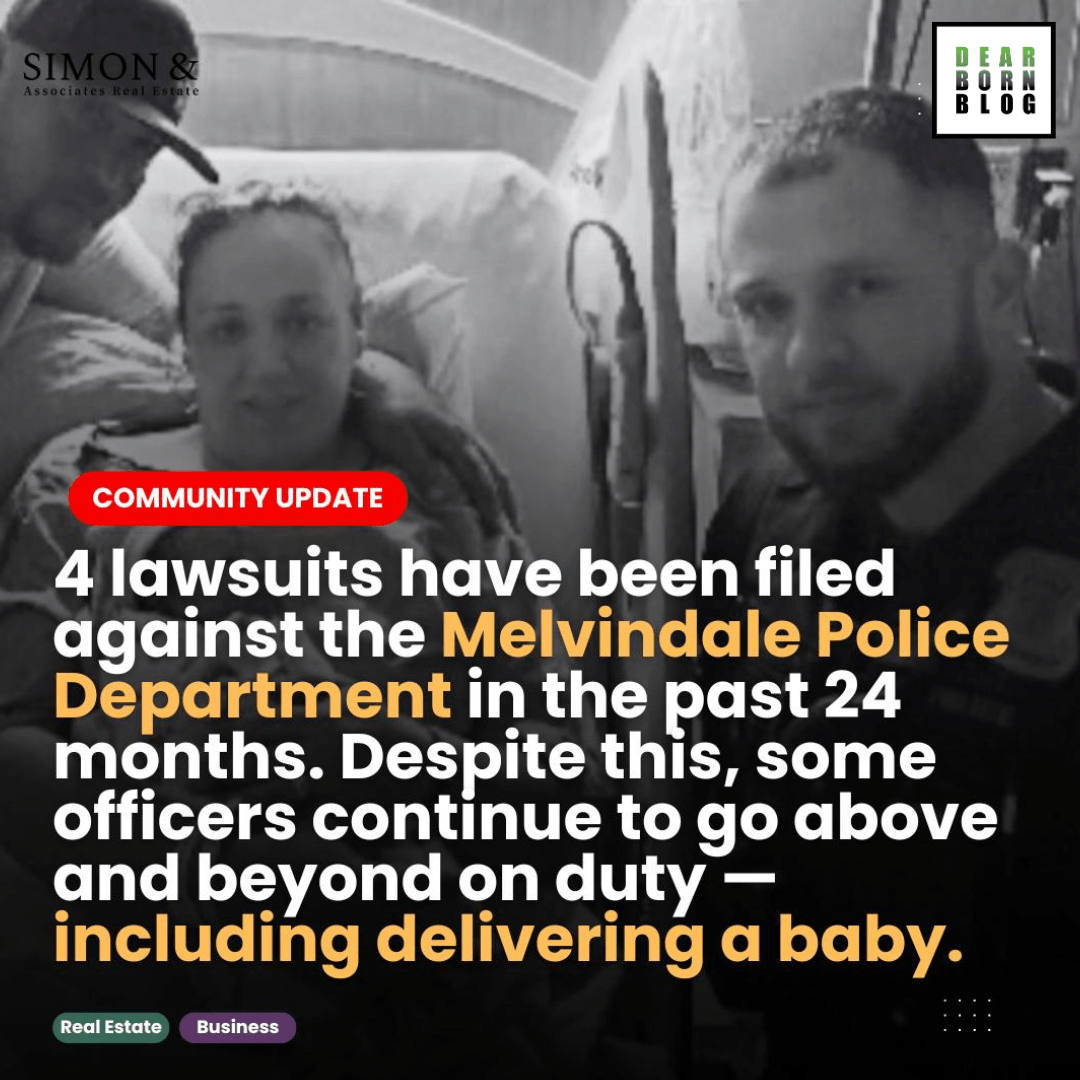
Over the past 24 months, four civil lawsuits have been filed against the Melvindale Police Department, raising serious questions about accountability, training, and public trust. At the same time, individual officers have been publicly recognized for acts of compassion — including assisting in the emergency delivery of a newborn baby. This contrast reflects a deeper conversation unfolding in Melvindale and neighboring Dearborn: how communities can demand justice, transparency, and reform while also recognizing humanity and service within public institutions.
A Department Under Scrutiny
In the last two years, four separate lawsuits have been filed against the Melvindale Police Department (MPD), according to public court records and local reporting. These civil cases allege a range of misconduct, including excessive force, wrongful detention, and violations of constitutional rights.
While lawsuits do not equal guilt, their frequency within a relatively small department has drawn regional attention — particularly in a moment when communities nationwide are reassessing policing models, oversight mechanisms, and the balance between public safety and civil liberties.
Legal experts note that lawsuits often emerge not only from individual actions but also from systemic issues, including training gaps, unclear use-of-force policies, and insufficient accountability frameworks.
“Civil litigation is often the only avenue families have to seek answers when internal systems fail.” — Civil rights attorney quoted in regional media.
The Lawsuits: What We Know
Public filings show that the four cases against MPD span different circumstances but share common themes.
Key allegations include:
- Use of force during routine traffic stops
- Detention without probable cause
- Failure to provide timely medical assistance
- Retaliation following citizen complaints
None of the cases have resulted in criminal convictions against officers as of publication, and some remain ongoing. City officials have stated that Melvindale “vigorously defends” its officers while also reviewing internal policies when concerns arise.
Still, community advocates argue that repeated lawsuits — regardless of outcome — represent warning signals that demand structural reform rather than reactive responses.
A Moment of Humanity: Officers Deliver a Baby
Against this backdrop, a very different story emerged from the same department.
In late 2025, Melvindale police officers responding to a medical emergency call assisted in the safe delivery of a baby after paramedics were delayed. The incident, later shared publicly with the family’s consent, showed officers offering calm guidance and hands-on support during an unplanned home birth.
The newborn and mother were reported healthy, and the officers involved received commendations for their actions.
Why This Matters
Moments like this resonate deeply because they remind residents that:
- Police officers are often first responders in unpredictable, life-or-death situations
- Compassion and service still exist within institutions facing criticism
- Accountability and humanity are not mutually exclusive
“You can demand reform and still recognize when someone does the right thing.” — Melvindale resident interviewed after the incident.
Two Truths Can Exist at Once
One of the most challenging aspects of public discourse around policing is holding two truths simultaneously:
- Institutions must be accountable, especially when harm occurs
- Individuals within those institutions are capable of care, courage, and service
This tension is not unique to Melvindale. Across Michigan — including Dearborn — communities are grappling with how to transition toward public safety models rooted in prevention, mental health support, and community trust, while still responding to emergencies effectively.
Community Voices: Calls for Reform, Not Erasure
Local activists and residents have emphasized that criticism of policing practices is not an attack on safety itself. Instead, many advocate for:
- Independent civilian oversight boards
- Mandatory body camera transparency
- De-escalation and mental health training
- Clear disciplinary processes when misconduct occurs
These proposals align closely with Green Party platform principles, which prioritize community-led safety, restorative justice, and reduced reliance on force-based policing models.
In Dearborn, similar conversations have already led to expanded community policing initiatives and greater emphasis on nonviolent intervention strategies.
A Regional Context: Dearborn’s Perspective
Dearborn’s experience provides useful context for Melvindale.
In recent years, Dearborn has invested in:
- Community trust-building initiatives
- Data transparency around police activity
- Public dialogue between residents and law enforcement
These efforts have coincided with declining crime rates and improved public perception of safety, according to city-released data.
For many residents, Dearborn demonstrates that reform does not weaken public safety — it strengthens it.
Accountability Is Not Anti-Safety
At Dearborn Blog, we recognize a fundamental truth: justice and safety must grow together.
Holding departments accountable through legal systems is not anti-police; it is pro-community. Celebrating acts of compassion is not excusing misconduct; it is affirming humanity. Both are necessary for a future where public institutions truly serve the people.
This philosophy also extends beyond borders. As Dearborn residents continue to stand for human rights — including solidarity with Palestine and all communities facing systemic injustice — the call for dignity, transparency, and accountability remains consistent, whether locally or globally.
Key Takeaways
Melvindale Police Department
- Four civil lawsuits filed in 24 months raise accountability concerns
- No criminal convictions tied to these cases as of publication
Community Response
- Residents demand reform, transparency, and civilian oversight
- Acts of compassion by individual officers are acknowledged, not ignored
Regional Lessons
- Dearborn’s reform-oriented approach offers a potential roadmap
- Community-centered safety aligns with sustainability and justice values
Sources
- Wayne County civil court records related to Melvindale Police Department cases.
- Local reporting on police misconduct litigation in Downriver communities.
- Michigan civil rights litigation analysis — ACLU of Michigan.
- City of Melvindale public statements on police lawsuits.
- News coverage of Melvindale officers assisting in emergency childbirth.
- Resident interviews following MPD baby delivery incident.
- Statewide policing reform trends — Michigan Public Radio.
- Green Party platform on community safety and justice reform.
- Dearborn Police Department community policing initiatives overview.
- City of Dearborn annual public safety report.
Disclaimer:
This article is based on publicly available records, verified news reports, and community accounts at the time of publication. Lawsuits referenced are civil matters and do not constitute findings of guilt. Dearborn Blog is committed to fair, balanced, and responsible journalism. For any corrections, updates, or comments you would like inserted into this article, please email info@dearbornblog.com.

 Dearborn Blog