

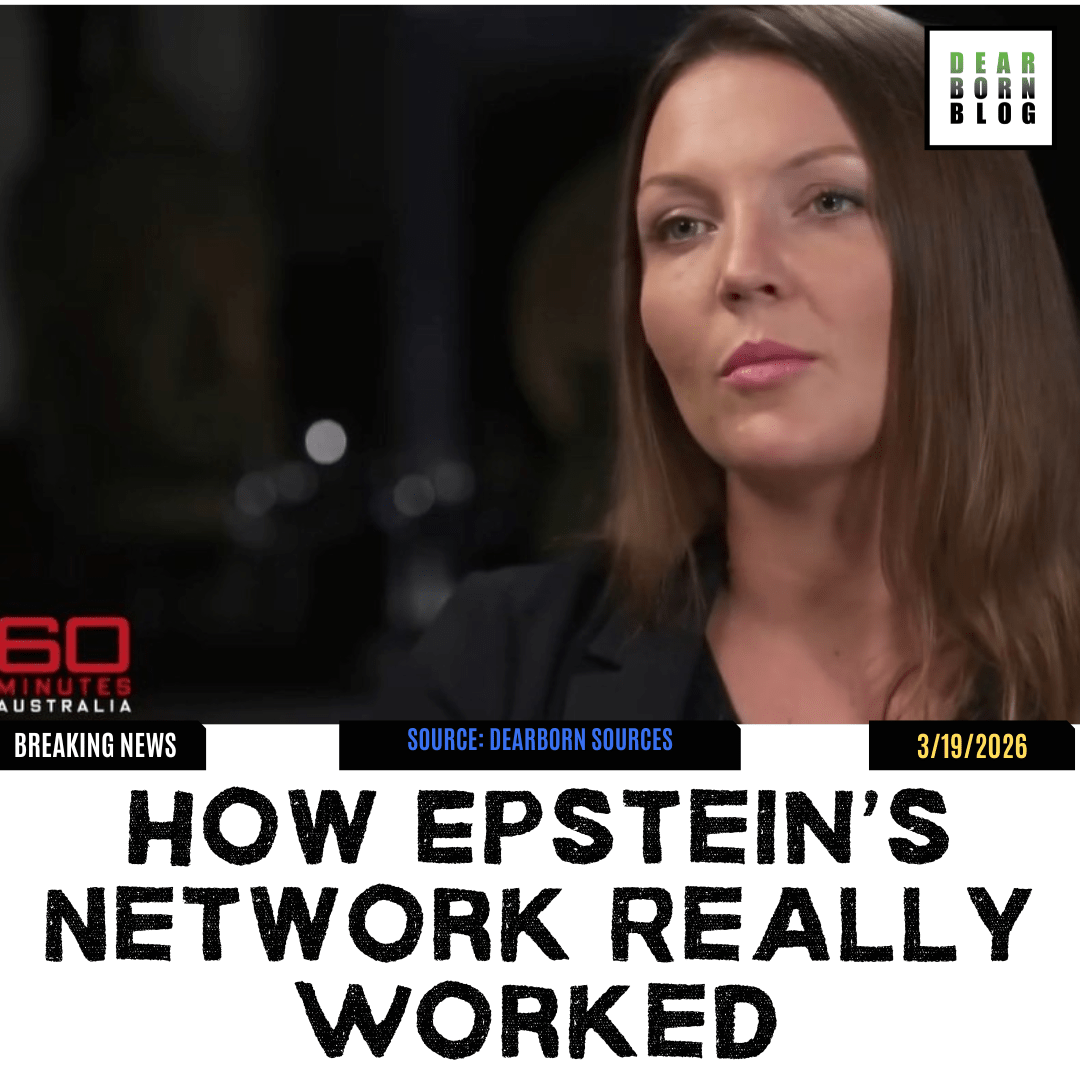
Courtney Wild’s interview with 60 Minutes Australia does something the Epstein discourse too often fails to do: it strips away the internet static and shows, in brutally human terms, how a trafficking operation actually functions from the inside. Not through cartoon-villain theatrics. Through grooming, dependency, money, shame, and the slow corruption of a child’s sense of normal. Wild was featured in the March 2026 special The Reckoning: Inside the Epstein Files, which centered survivors and whistleblowers rather than the usual parade of powerful names.
Wild has long said she was only 14 when she was first taken to Jeffrey Epstein’s Palm Beach mansion. She described being lured there under false pretenses, abused, and then manipulated into returning. Over time, she said, Epstein persuaded her to recruit other girls, and in the 60 Minutes Australia material she described the scale in devastating terms: she brought “50 to 70” girls into his orbit. That number is horrifying on its face, but the deeper horror is structural: Epstein did not merely target vulnerable teenagers, he weaponized one child’s trauma to reach the next. That is not a side detail. That is the machine.
What makes Wild’s account so important is that it destroys the lazy myth that trafficking always looks like abduction in a dark alley. Sometimes it looks like a rich older man presenting himself as help. Wild has said she was living in instability and near-homelessness, and that Epstein made himself seem like a lifeline. That is how predation often works in the real world: it studies need, then impersonates rescue. The result is not consent. It is coercion dressed up in expensive clothes and polite surroundings. Grim little magic trick.
The legal system then added its own layer of rot. Federal prosecutors secretly negotiated a 2007 non-prosecution agreement with Epstein that kept victims in the dark while giving him a remarkably lenient path through state court and shielding named and unnamed co-conspirators from federal prosecution in South Florida. The Justice Department’s own Office of Professional Responsibility later said victims were not informed or consulted before the deal was signed, and the Eleventh Circuit acknowledged that Wild and other victims were left in the dark and apparently misled, even as it ruled against her on legal grounds. In plain English: the system saw smoke, smelled fire, and then tiptoed around the gasoline.
Wild refused to let that stand. Her lawsuit became one of the most important survivor-led challenges in the Epstein saga, forcing the secret plea deal into public view and turning a personal fight into a national test of whether crime victims have rights before prosecutors formalize a sweetheart deal behind closed doors. That fight has now helped inspire the proposed Courtney Wild Reinforcing Crime Victims’ Rights Act, a bill designed to close the loopholes exposed by the Epstein case and make it harder for prosecutors to bury victims under procedural fog. Bureaucracy loves fog. Predators do too.
That is why the interview matters now, not just as history but as pressure. In 2025, survivors including Wild publicly demanded fuller disclosure of Epstein-related records, warning that secrecy had allowed speculation, denial, and conspiracy culture to metastasize around their trauma. In early 2026, lawmakers were granted access to unredacted DOJ files, New Mexico authorities reopened scrutiny around Epstein’s former Zorro Ranch, and the scandal kept reverberating through elite institutions on both sides of the Atlantic. Some viral claims circulating online remain murky or unverified, but the documented reality is already plenty damning without adding internet goblin dust.
Even the latest headlines show the same pattern survivors have been describing for years: delay, secrecy, prestige shielding accountability. In Britain, Andrew Mountbatten-Windsor, formerly Prince Andrew, was arrested in February 2026 on suspicion of misconduct in public office related to his Epstein links, then released under investigation without charge. In the United States, a judge also gave preliminary approval this month to a settlement of up to $35 million involving claims that Epstein advisers helped enable the trafficking of young women and teenage girls. The names, institutions, and jurisdictions change. The basic architecture of impunity does not.
What Courtney Wild offered in this interview was not gossip. It was anatomy. She showed how abuse spreads through fear, money, manipulation, and the moral injury forced onto children who are made to feel complicit in what was done to them. That matters because survivors are still too often asked the wrong questions. Why did you go back? Why didn’t you tell someone sooner? Why did you recruit others? The real question is uglier and more useful: what kind of predator designs a system where those outcomes become predictable? Wild’s testimony answers it. Epstein built a self-replicating network powered by vulnerability and protected by wealth.
And decades later, survivors are still doing the labor that institutions failed to do: telling the truth clearly enough that nobody can pretend not to understand it.
Sources
- Nine / 60 Minutes Australia, The Reckoning: Inside the Epstein Files program description, Feb. 26, 2026.
- ABC News, “How Epstein survivor fought for transparency, justice for victims,” Nov. 18, 2025.
- YouTube / 60 Minutes Australia, “I Brought Him 50 Girls”: Epstein Survivor on His Recruitment.
- U.S. Department of Justice, Office of Professional Responsibility statement on Epstein 2006–2008 investigation.
- U.S. Court of Appeals for the Eleventh Circuit, In re Courtney Wild, Apr. 15, 2021.
- U.S. Rep. Debbie Wasserman Schultz announcement of the Courtney Wild Reinforcing Crime Victims’ Rights Act, Sept. 2025, plus draft bill text.
- ABC / Good Morning America and ABC News reporting on survivor demands for Epstein file transparency, Sept. 2025.
- Reuters on congressional access to unredacted DOJ files, Feb. 6, 2026.
- CBS/AP on renewed investigation at Epstein’s former Zorro Ranch, Mar. 10, 2026.
- AP on the February 2026 arrest and release under investigation of Andrew Mountbatten-Windsor.
- Reuters on preliminary approval of a $35 million settlement involving Epstein advisers, Mar. 3, 2026.

 Dearborn Blog