

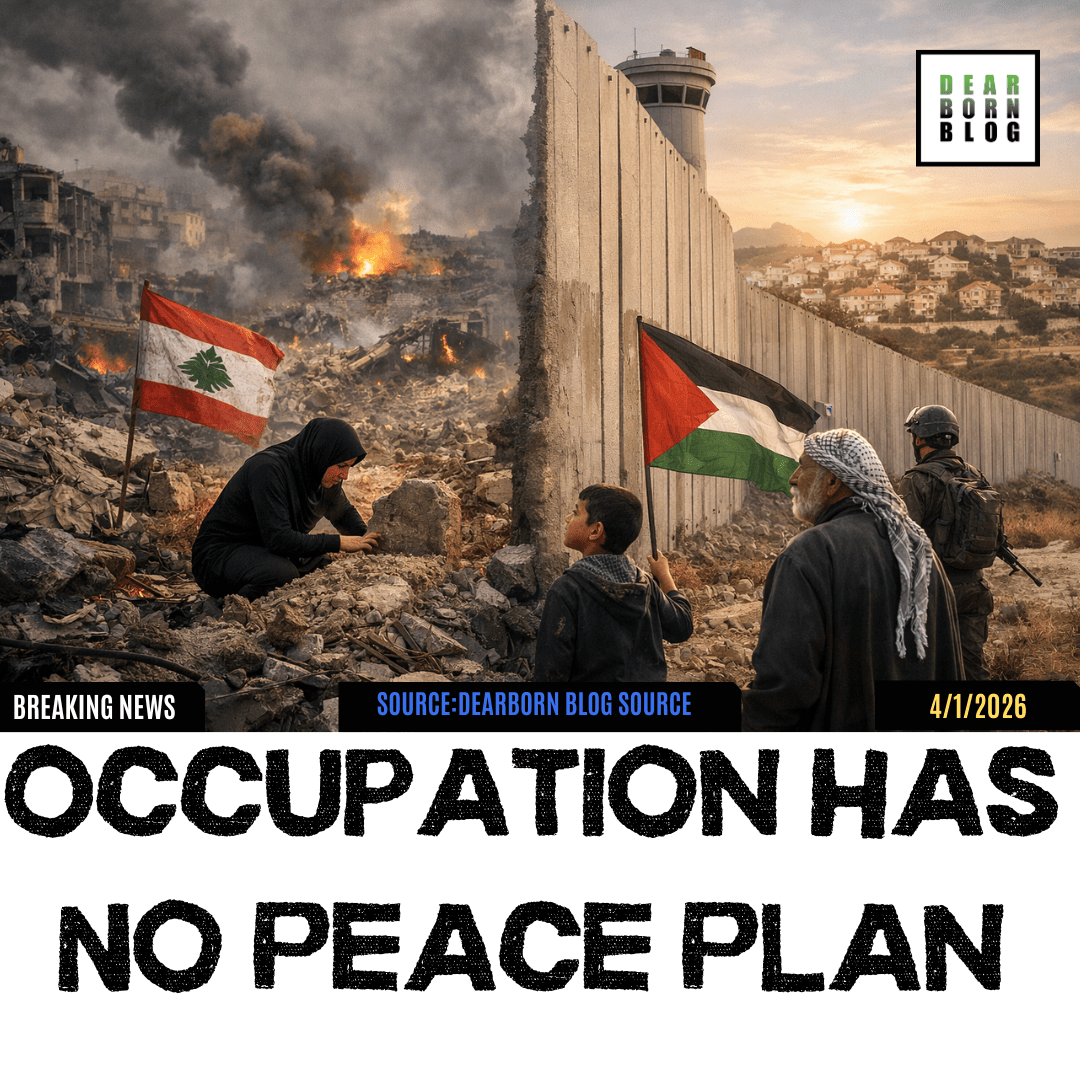
Occupation has never produced lasting peace. From Lebanon to the West Bank, history shows that ceasefires without justice only delay the next conflict.
Introduction
Across modern Middle Eastern history, one pattern repeats with striking consistency: occupation does not create peace—it suspends conflict temporarily while laying the groundwork for its return. From southern Lebanon to the West Bank, from Syria’s disengagement lines to Egypt and Jordan’s treaties, the evidence suggests that stability imposed under imbalance rarely endures.
Lebanon: Withdrawal Without Resolution (2000–2006)
In May 2000, Israel withdrew from southern Lebanon after nearly two decades of occupation. The moment was widely framed as a step toward peace. Yet the withdrawal left unresolved structural tensions: contested borders, ongoing airspace violations, and the continued presence of armed non-state actors.
By 2006, those tensions erupted into full-scale war. The July War demonstrated that withdrawal alone—absent a political settlement addressing sovereignty and security—does not end conflict. It simply resets its timeline.¹
“Ceasefire is not peace. It is a pause shaped by power, not justice.”
The aftermath reinforced a key reality: without addressing root causes, military disengagement becomes a temporary adjustment, not a resolution.
Syria 1973: The Frozen Front
Following the October 1973 war, Syria and Israel entered into a disengagement agreement in 1974. The Golan Heights, however, remained under Israeli control.
For decades, the Syrian front has been described as “quiet.” Yet this quiet reflects deterrence, not reconciliation. The absence of open war masks a deeper unresolved conflict over territory, sovereignty, and international law.²
This “cold stability” illustrates how occupation can suppress conflict without resolving it—creating a long-term stalemate rather than peace.
The West Bank: Permanent Temporariness
No case better illustrates the contradiction of “managed conflict” than the West Bank. Since 1967, the territory has remained under Israeli control, with expanding settlements and a fragmented governance structure.
Annexation debates, settlement expansion, and periodic escalations reveal a system not moving toward peace, but toward entrenchment.³
Key Insight: Occupation systems often create the illusion of stability while structurally preventing a final political resolution.
Rather than a temporary condition, the occupation has become a permanent framework—one that manages daily life without resolving underlying political claims.
Egypt and Jordan: Peace with Limits
Egypt (1979) and Jordan (1994) signed formal peace treaties with Israel, often cited as successful examples of conflict resolution.
Yet these agreements reveal the limits of state-level peace under broader regional tension:
Peace remains largely “cold,” with limited normalization at the societal level
Public opinion in both countries continues to reflect deep skepticism
The Palestinian question remains unresolved, shaping regional dynamics
These treaties demonstrate that while formal agreements can end direct state conflict, they do not necessarily resolve the wider conditions that produce instability.⁴
A Human Cost: Dearborn and Lebanon
In October 2024, Kamel Ahmad Jawad, a resident of Dearborn, Michigan, was killed in an Israeli airstrike in southern Lebanon. His death, reported by outlets including Al Jazeera and Middle East Eye, underscores the global reach of regional conflicts.
For diaspora communities, these events are not distant—they are personal, immediate, and deeply felt.
This connection reinforces a broader truth: unresolved conflicts do not remain contained. They extend across borders, shaping lives far beyond the battlefield.
Conclusion
History offers a clear lesson: occupation has no inherent pathway to peace. It may impose order, enforce quiet, or create temporary stability—but it does not resolve the political, legal, and human questions at the heart of conflict.
From Lebanon to the West Bank, from Syria’s frozen front to the limits of formal treaties, the pattern is consistent. Without justice, sovereignty, and mutual recognition, what appears as peace is often only delay.
Sources
United Nations, Report of the Secretary-General on Israel’s withdrawal from Lebanon (2000)
UN Disengagement Observer Force (UNDOF) Reports (1974–Present)
Human Rights Watch, A Threshold Crossed (2021)
Camp David Accords (1978), Israel-Jordan Peace Treaty (1994)
Al Jazeera, “American killed in Lebanon strike” (Oct 2024)
Middle East Eye, “Dearborn man killed in Israeli airstrike” (2024)
BBC News, Middle East Conflict Timeline
International Crisis Group Reports
Carnegie Middle East Center Analysis
Disclaimer
This article is for informational and analytical purposes only. It does not constitute political advocacy or endorsement. All information is based on publicly available sources and is presented to encourage informed discussion.

 Dearborn Blog