

By Dearborn Blog Staff
Across West Africa, a bold experiment in regional unity is unfolding—one that holds powerful lessons for Arab communities yearning for solidarity beyond artificial borders.
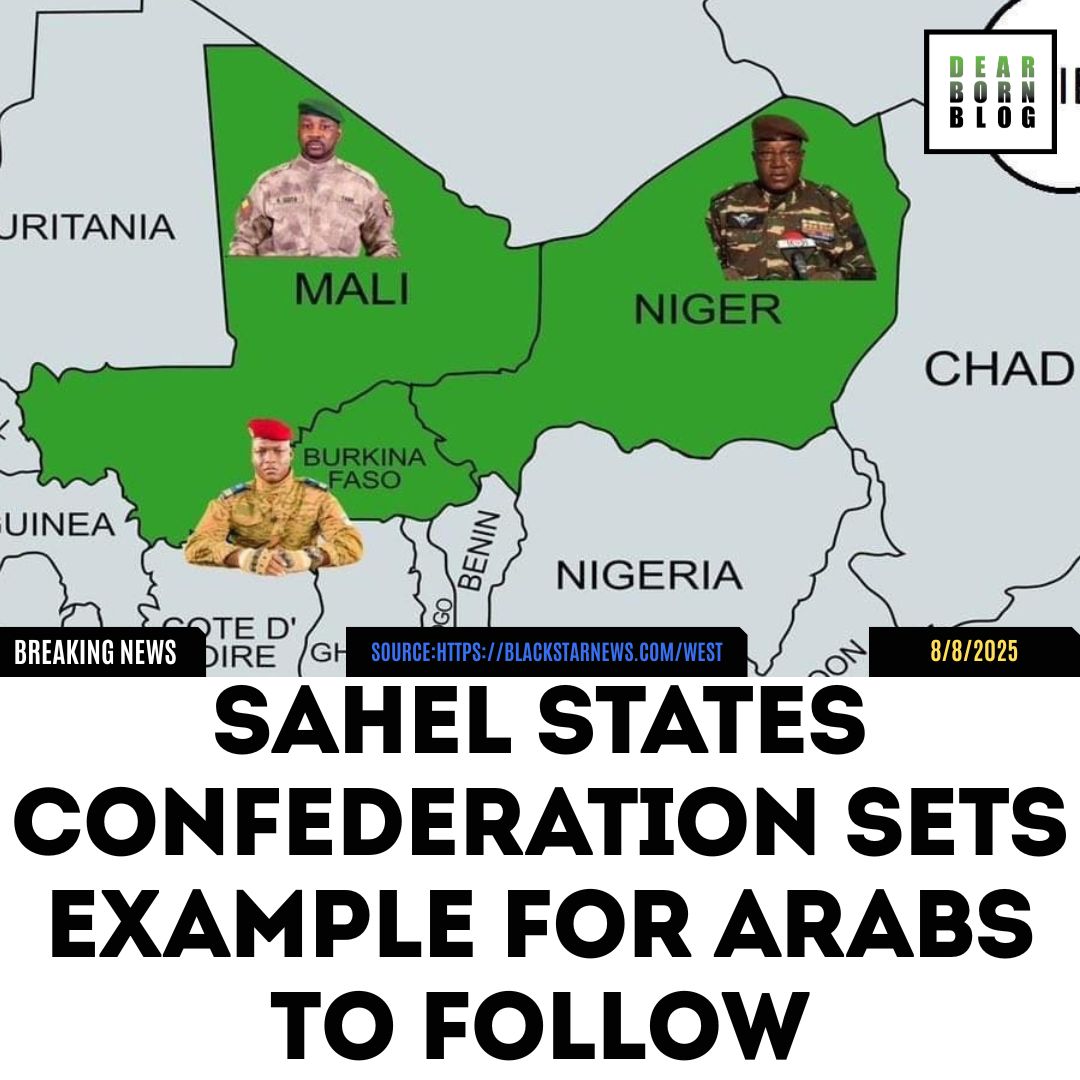
On July 6, 2024, Mali, Burkina Faso, and Niger officially joined forces under the Alliance of Sahel States (AES), establishing a confederation with ambitious aims: mutual defense, a shared currency and passports, and a coherent economic policy. Notably, they created a regional investment bank and stabilization fund to fund infrastructure and development projects while reducing dependency on foreign aid.
Mali’s leader, Assimi Goïta, put it simply:
“Today, there are no borders between Mali, Burkina Faso, and Niger… we are one people.”
“We hope the rest of Africans can look beyond the imaginary lines drafted to keep us apart. We would be stronger together.”
This project goes beyond rhetoric. AES has begun rolling out biometric passports, a regional investment bank with over $800 million in startup capital, and plans for a common customs area, and is even exploring a shared currency.
For Arab Americans—and broader Arabic-speaking societies—this challenges us to reflect: What would it look like if Arab nations prioritized unity and self-reliance? The AES’s momentum shows that when leaders work from shared history, common interests, and cooperation, seismic change is possible.
This model isn’t without its critics—some point to legal legitimacy and democratic deficits. Still, it represents a bold attempt to dismantle the legacies of colonial boundaries and build a future-oriented alliance on solidarity.
As we rebuild our communities here in Dearborn, it’s worth asking: Can we reimagine Arab unity in a way that transcends borders and politics, built on purpose and shared vision?


