

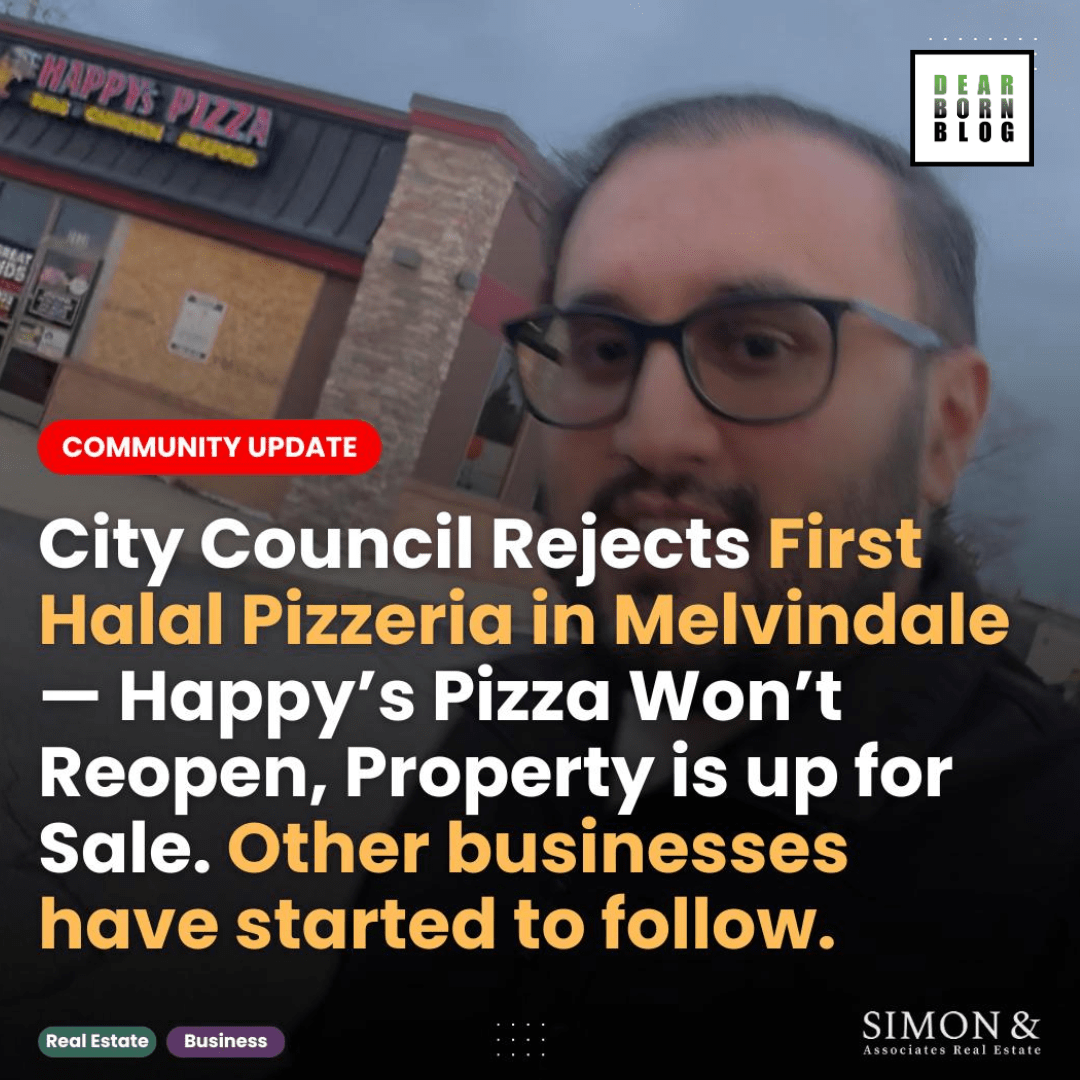
When Melvindale City Council declined the proposal for what would have been the city’s first halal pizzeria — in a location that Happy’s Pizza will not reopen and is now listed for sale — community members, entrepreneurs, and supporters of inclusive economic growth voiced strong reactions. This story goes beyond pizza: it underscores culture, representation, and the opportunities (and obstacles) for Muslim-owned businesses in the Downriver region of Southeast Michigan.
“No More Pizza Today”: A Community Talks Hunger, Identity, and Local Growth
In 2025, a prominent conversation emerged online and within business circles in Melvindale, Michigan, about opening the city’s first halal pizza restaurant. The proposal drew community excitement — locally and on social platforms — particularly given the substantial Muslim population in the Metro Detroit area and the strong demand for halal food options.
But in a pivotal decision-makers’ vote, the Melvindale City Council did not approve the application for this halal-focused eatery, citing—and some allege overstating—that “existing pizza places” already serve the area’s needs. The rejection effectively halted the establishment of a dedicated halal pizza business in the city.
Within weeks, the Happy’s Pizza location at 2630 Oakwood Blvd — long a neighborhood staple — remained closed and listed for sale, ending its presence in the community it once served.
The Voice of Local Entrepreneurs & Petitioners
“This isn’t just about a restaurant.”
This was a common refrain among petitioners and community leaders who launched a Change.org drive to encourage the council to reconsider and support the halal pizzeria proposal. Petition organizers highlighted that:
- A significant portion of Melvindale and surrounding communities identify as Muslim;
- Many existing pizza and food venues do not offer halal options or serve limited hours;
- A dedicated halal pizza restaurant could fuel local employment, economic activity, and cultural inclusion.
The petition underscored that halāl food — food prepared according to Islamic dietary laws — is not simply a preference but an expression of cultural and religious identity for many residents. Winning approval for such an establishment was framed as aligned with values of inclusiveness and respect.
What Happened at Happy’s?
Happy’s Pizza — a once-popular pizza and comfort food franchise with multiple Michigan locations — has seen mixed reviews and upper-level challenges in recent years, including a variety of customer complaints and ratings that vary widely by location.
At the Melvindale site, the closure and decision not to reopen drew additional attention because:
- It left a gap in local food options, particularly for families and workers seeking convenient dine-in or takeout choices;
- It created an opportunity for new businesses to enter a space already equipped with kitchen infrastructure;
- For many halal-food advocates, the closure set the stage for what might have been Melvindale’s first dedicated halal pizza restaurant — a gap now unlikely to be filled until new zoning or licensing approaches are considered.
The Broader Halal Food Landscape in Metro Detroit
Michigan’s halal food economy is vibrant and growing. Across Metro Detroit — especially in neighboring cities like Dearborn — halal eateries, grocery offerings, and halal food culture have become integral to the local economy.
In Melvindale itself, other halal food options, such as Halal Eatery at 3822 Oakwood Blvd, continue to thrive, serving wood-smoked burgers, wings, and other halal-friendly dishes.
Organizations and advocates in the halal community note that halal food isn’t niche — it’s part of daily life for many Michigan families and increasingly draws non-Muslim consumers who value ethical sourcing, transparent food standards, and culturally respectful businesses.
“A great halal pizza restaurant would have done more than sell food — it would have honored community identity and supported local ownership.”
This sentiment, echoed by many proponents of the project, captures the cultural and socio-economic significance of the discussion.
Why This Matters for Dearborn & Downriver
Dearborn, home to one of the largest Muslim populations in the United States, has long been a hub for halal food culture — from casual eateries to classic Middle Eastern restaurants featured in regional food tours.
Within this context, the Melvindale decision feels especially relevant:
- Economic development: Halal food entrepreneurship is part of broader small-business growth in Southeast Michigan. Supporting diverse food businesses fuels job creation and reshapes the region’s food economy in ways that reflect real community needs.
- Cultural inclusion: Providing halal options is not only about dining sites; it signals recognition of cultural identity and inclusiveness within municipal policies and urban planning.
- Green and ethical consumption: The halal food movement often overlaps with sustainability trends — from plant-based offerings to community-centric sourcing — aligning with environmental and ethical food values important to many residents of Dearborn and beyond.
Lessons, Reflections, and Future Opportunities
The Melvindale halal pizzeria initiative, even though unsuccessful this round, offers lessons for civic leaders and community advocates:
- Engagement matters: Ensuring community voices — especially those historically underrepresented — are part of development conversations is essential for equitable growth.
- Policy and zoning reform: Addressing barriers that prevent culturally specific businesses from opening may require targeted policy review at city council and planning commission levels.
- Cross-community partnerships: Collaboration between entrepreneurs, residents, and local government could foster new business incubators or food-entrepreneur support networks that serve diverse needs.
As Dearborn continues to celebrate its own halal food identity and marketplace, there’s potential for leadership in inclusive food development that resonates with both economic and cultural goals.
Source List
- Petition calling for Melvindale halal pizza approval, detailing city council rejection and community support.
- Happy’s Pizza Melvindale site and menu details, including closure status.
- Community reaction via social media on Melvindale halal pizza search and outreach.
- Yelp listing and reviews showing a range of halal and pizza options in the broader area (context).
- Halal Eatery review and menu, illustrating existing halal food presence in Melvindale.
- Halal food and consumer trend report in Michigan showing broader cultural and economic context.
- BBB business profile for Happy’s Pizza, reflecting mixed business performance.
Disclaimer: Dearborn Blog strives for fair, accurate, and balanced reporting. If you have additional information, corrections, or updates you would like included in this article, please contact us at info@dearbornblog.com.

 Dearborn Blog
Alnizamdmh.com
عÙس٠اØ٠د سÙÙ Ùاس٠Ùط٠اÙ٠جÙدÙ
739814500
alnizamdmh.com
DMHhttp://www.alnizamdmh.com
تعز اÙÙÙ Ù
[signatureImage]
LikeLike