

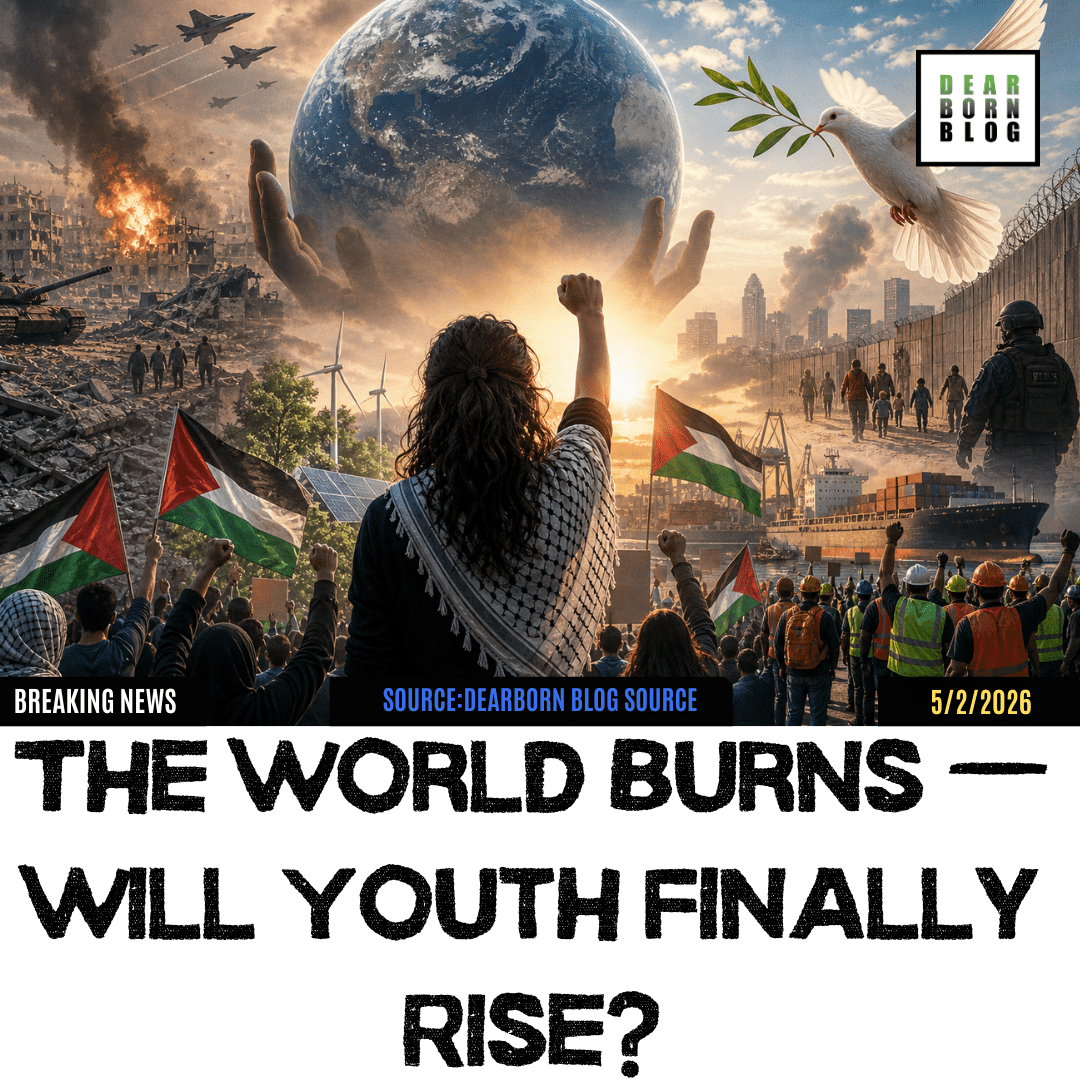
A World at the Breaking Point: What the Report Says
Every April, Amnesty International publishes its annual barometer of the world’s human rights health. The April 2026 edition — formally titled The State of the World’s Human Rights — covers developments across more than 150 countries throughout 2025 and into early 2026.[1] This year’s edition reads less like a policy document and more like a moral emergency alert. In language that is extraordinary even for an organization that does not traffic in ambiguity, Secretary General Agnès Callamard opens the report with a scene of global predation: political leaders like Trump, Putin, and Netanyahu “carried out their conquests for economic and political domination through destruction, suppression and violence on a massive scale.”[2]
Far from a fringe view, this is the documented conclusion of one of the world’s most credible human rights bodies after systematically monitoring events on every inhabited continent. The report’s global analysis confirms that crimes under international law were committed extensively in 2025 — prominently including what Amnesty International formally designates as Israel’s genocide against Palestinians in Gaza, as well as Russia’s crimes against humanity in Ukraine and ongoing war crimes in Myanmar and Sudan.[3] The breadth of the crisis is staggering: authoritarian practices have intensified worldwide, refugees and migrants face mass deportations driven by racial discrimination, the climate crisis accelerates without meaningful governmental response, and technology is being weaponized by states to surveil and silence dissent.
But what gives this report its urgency is its insistence that this is not merely another difficult chapter in history. It is, as Callamard writes, “the challenging moment, threatening to destroy all that was built up over the last 80 years” — the post-World War II architecture of international law, human rights protections, and multilateral cooperation that generations of activists, diplomats, and freedom fighters bled and sacrificed to construct.[4] Whether that architecture survives the current onslaught depends, the report argues, not on waiting for powerful governments to act — but on the organized courage of people at every level of society.
Gaza: Genocide Confirmed, World Looks Away
For the community of Dearborn — home to one of the largest concentrations of Arab Americans and Palestinians in the United States — the report’s findings on Gaza are not abstractions. They are dispatches from the homeland. Amnesty International’s conclusions are unequivocal: Israel committed genocide against Palestinians in Gaza. The genocide, which entered its third year in 2025, continued even beyond a ceasefire between Israeli armed forces and Palestinian armed groups that came into effect on October 10, 2025.[5] According to UNICEF data cited in the report, 415 Palestinians were killed by Israeli forces after the ceasefire — at least 100 of them children.[6]
The year 2025 saw Israeli air and ground forces kill 26,791 Palestinians and injure 64,065 in Gaza — 60% of them children, women, and elderly people.[7] Following a period of improved humanitarian access in January through early March, the Israeli military imposed a total siege that was only partially eased in May — a siege that cut electricity to Gaza’s last desalination plant and banned fuel and cooking gas from entering for more than six months.[8] According to the Integrated Food Security Phase Classification data cited in the report, by mid-August more than half a million people in Gaza faced famine-level catastrophic starvation, with another 1.07 million in the second-highest starvation phase and 396,000 in critical food insecurity.[9]
“Israel continued to deliberately inflict conditions calculated to bring about the physical destruction of Palestinians in the occupied Gaza Strip.”— Amnesty International, The State of the World’s Human Rights, April 2026
In the occupied West Bank, Israeli authorities demolished 1,658 buildings and permanently displaced some 2,116 Palestinians, while 86 new illegal outposts were established on top of the 371 already in existence.[10] Settler violence — increasingly encouraged by Israeli military and government officials — expelled some 220 families from 19 villages across the West Bank, according to the Israeli human rights organization B’Tselem.[11] The blockade of Gaza entered its 19th year. OCHA documented 849 roadblocks and checkpoints in the West Bank alone, choking Palestinian movement between villages and delaying emergency services.[12]
Perhaps most damning is the report’s documentation of how the world’s most powerful governments — especially the United States — failed to take meaningful action to stop the genocide or to end Israel’s unlawful occupation and apartheid.[13] The Trump administration not only continued arming Israel with weapons used in direct attacks on civilians but also issued sanctions against prosecutors and judges of the International Criminal Court — the very institution charged with enforcing accountability — in a brazen effort to shield Israeli and U.S. nationals from prosecution.[14]
📊 Gaza: By the Numbers (2025)
- 26,791 Palestinians killed by Israeli forces in Gaza during 2025
- 64,065 injured — 60% were children, women, and elderly
- 500,000+ people in Gaza facing catastrophic famine-level starvation by mid-August
- 13,000+ children hospitalized with acute malnutrition
- 415 Palestinians killed after the October ceasefire — at least 100 of them children
- 1,658 buildings demolished in the West Bank in 2025 alone
- 56 journalists killed by Israeli forces in 2025 — more than in any other country
Sources: Amnesty International, UNICEF, OCHA, IFJ — cited in The State of the World’s Human Rights, April 2026
The report also notes that a growing coalition of states is beginning to act. The Hague Group — comprising Bolivia, Colombia, Cuba, Honduras, Malaysia, Namibia, Senegal, and South Africa — committed to halting all arms trade with Israel.[15] Spain enshrined a comprehensive arms embargo to Israel into law. Dockworkers in France, Greece, Italy, Morocco, and Sweden physically disrupted arms shipment routes to Israel.[16] South Africa’s genocide case against Israel at the International Court of Justice continues. These are not small acts — they are precisely the kind of principled solidarity that the international order requires, and they demonstrate that people-powered resistance produces tangible results.
The United States: Repression Comes Home
For Arab American communities in Dearborn and across the country, the Amnesty International report’s section on the United States lands with a particular weight — because it names and documents the crackdowns many in our community have lived through firsthand. The report’s findings on the U.S. are among the most extensive and alarming in the Western section of the global analysis, presenting a portrait of a government that has turned authoritarian tools inward while enabling atrocities abroad.
The Trump administration implemented what Amnesty describes as a “racist, anti-migrant agenda” through executive orders that “dehumanized and criminalized migrants and people seeking safety,” deploying masked federal agents, armored vehicles, and enforcement sweeps near schools, faith centers, and hospitals.[17] The administration invoked the Alien Enemies Act to illegally expel 252 Venezuelan men to El Salvador’s notorious Terrorism Confinement Centre — a facility documented for torture and enforced disappearance.[18] Access to asylum at the U.S.-Mexico border was effectively ended through the termination of existing appointment systems.[19]
On campuses across the country — including at universities with significant Arab and Muslim student populations — the repression of pro-Palestinian protest intensified dramatically. The Trump administration targeted international students and faculty who expressed solidarity with Palestinians, using social media monitoring, visa status tracking, and automated threat assessments to identify and expel them.[20] At least 11 foreign students and protesters were sought for detention and deportation specifically because of their activism in support of Palestinian rights. Approximately 200 to 300 visas were revoked on the basis of “support for terrorism” or “anti-U.S. views” — largely for peaceful protest or social media posts opposing the genocide in Gaza.[21]
“Students were targeted for visa revocation and deportation through social media monitoring, visa status tracking, and automated threat assessments of foreign individuals on visas — many for nothing more than peaceful protests or posting against the ongoing genocide.”— Amnesty International, The State of the World’s Human Rights, April 2026
The report also documents police shooting 1,143 people in the United States in 2025 — disproportionately affecting Black Americans — and the U.S. military conducting extrajudicial killings in Latin America and the Caribbean based on unilateral terrorism designations.[22] Congress and 24 states introduced 62 bills restricting the right to protest, with five enacted.[23] The LGBTI suicide hotline’s youth-specific option was shut down. Climate and environmental regulations were rolled back. And 74 anti-LGBTI bills became law — restricting healthcare for transgender youth and censoring LGBTI content in schools.[24] This is the human rights record of the United States in 2025, as documented by an independent global body.
A Burning Planet, A Crumbling System
The Amnesty International report does not separate human rights from economic justice or climate justice — because they are inseparable. The global analysis documents that the world is on track to reach roughly three degrees Celsius of warming above pre-industrial levels by the end of this century, per data from the UN Environment Programme.[25] This is not an environmental abstraction — it is a death sentence for millions. At least two billion people live within five kilometers of more than 18,000 operating fossil fuel infrastructure sites across 170 countries; more than 520 million of them are children.[26]
World leaders gathered at COP30 in Brazil in November 2025 and failed to build on — let alone advance — the prior commitment to transitioning away from fossil fuels.[27] Meanwhile, chaotic and abrupt cuts to international development assistance by the United States disrupted or shut down health programs, interrupted access to life-saving medicines, and deepened famine conditions across the Global South.[28] According to the UN Secretary-General’s own 2025 report, just 35% of Sustainable Development Goal targets are on course, nearly half are stagnating, and 18% have actually regressed below 2015 baseline levels.[29]
🌍 Global Justice: The Scale of the Crisis
- ~300 million people in urgent need of humanitarian aid worldwide — funding gap of nearly $25 billion
- 48% of UN Sustainable Development Goal targets are stagnating; 18% have regressed
- 2 billion+ people live near fossil fuel infrastructure sites — 520 million of them children
- 3°C projected warming by century’s end under current governmental policies
- $300 billion/year estimated climate adaptation financing needed by lower-income nations
- 156 states voted at the UN General Assembly to negotiate controls on autonomous weapons systems
Sources: UN Environment Programme, UN Secretary-General Report, Amnesty International, IRC — cited in The State of the World’s Human Rights, April 2026
Amnesty also documents the weaponization of technology against human rights defenders and youth protesters. The U.S. government deployed surveillance tools against student and migrant protesters. Authorities in Kenya used AI-assisted online intimidation, threats, and unlawful surveillance to suppress youth-led protests. The commercialized version of China’s internet censorship infrastructure — its so-called Great Firewall — was sold to Pakistan’s government.[30] Social media companies like X and Meta gutted their trust and safety teams and rolled back fact-checking programs. Algorithmic radicalization of young people on platforms like TikTok — steering those searching for mental health content into spirals of depressive material — was documented and flagged.[31]
Resistance Is Not Optional — It Is the Point
It would be easy to read the Amnesty International report and conclude that the situation is hopeless. That would be a mistake — and the report itself refuses that conclusion. Amid the documentation of genocide, authoritarian crackdowns, and climate inaction, the report also chronicles a global groundswell of resistance that is real, growing, and consequential.
In Nepal, a youth-led uprising against government corruption toppled the government — a reminder that organized young people can bring down systems that seem immovable.[32] Labor strikes by dockworkers in France, Greece, Italy, Morocco, Spain, and Sweden physically disrupted arms shipments to Israel — proving that workers exercising their power can bend the arc of geopolitics.[33] Women gained expanded abortion rights in Denmark, the Faroe Islands, Norway, and Luxembourg. The International Criminal Court — under sustained attack by the United States — continued to issue arrest warrants, prosecute war crimes, and deliver convictions. The Council of Europe established a special tribunal specifically for the crime of aggression against Ukraine. The UN General Assembly saw 156 states vote to negotiate controls on autonomous weapons systems.[34]
The Green Party of the United States has long held that these issues — from Palestinian rights to climate justice to racial equity — are not separate concerns but expressions of a single, coherent demand: that human beings matter more than profit and power. The Green Party’s platform calls for ending U.S. military aid to governments committing human rights violations, a rapid and just transition away from fossil fuels, abolition of the death penalty, comprehensive immigration reform rooted in human dignity, and full democratic participation for all communities.[35] The Amnesty International report is, in effect, a 400-page argument for precisely these priorities — rooted not in ideology but in documented evidence from every corner of the world.
“History is not just something that is done to us. It is also ours to make. And for the sake of humanity, it’s time to make human rights history.”— Agnès Callamard, Secretary General, Amnesty International, April 2026
The report’s call to action — addressed to politicians, diplomats, activists, workers, consumers, faith communities, and youth — is not a platitude. It is a strategic framework. Callamard writes that resistance means three things simultaneously: defending what must be protected, disrupting what must be stopped, and transforming toward a human rights vision adequate to the world we are becoming — not just the world we once were.[36]
Dearborn’s Voice: Why Youth Must Lead Now
In Dearborn, Michigan — the city with the highest percentage of Arab Americans of any city in the United States — the Amnesty International report is not a document about “over there.” It is a document about our families, our neighbors, our community members’ cousins in Gaza who are starving, our students at the University of Michigan-Dearborn who have been monitored for their political speech, our community’s mosque leaders surveilled by federal agencies. The repression documented in the report is felt here — on Miller Road, on Dix Avenue, in the packed community centers where families gather to mourn and organize and refuse to be silenced.
Dearborn’s Arab American youth stand at a remarkable intersection of identity, history, and opportunity. They are the children of communities that have survived displacement, war, and discrimination — and they carry that history not as a burden but as a source of clarity. They understand, viscerally, what the Amnesty International report documents with statistics: that the international order only holds when people demand that it holds, and that governments only act when organized communities make inaction politically costly.
🔊 Five Ways Dearborn Youth Can Act Now
- Read the report — Download and share Amnesty International’s The State of the World’s Human Rights 2026 with your peers, your teachers, your mosques, and your community organizations. Knowledge is the first act of resistance.
- Register and vote — In 2026 midterms, Dearborn’s Arab American vote is a political force. Support candidates who align with human rights platforms — including Green Party candidates who have unequivocally opposed the genocide in Gaza.
- Join and build organizations — Connect with local chapters of Amnesty International, the Arab American Civil Rights League, Michigan’s BDS Coalition, and other groups doing the daily work of advocacy and accountability.
- Engage campus spaces — Despite the chilling effect of visa revocations and federal surveillance, student organizing remains one of the most powerful levers of historical change. Document, organize, and know your rights.
- Demand media accountability — When local and national media misrepresent or silence Palestinian voices, write letters, organize campaigns, and use social media strategically to correct the record and center truth.
The Amnesty International report arrives at a moment when Dearborn’s community has already demonstrated extraordinary civic power. In the 2024 presidential primary, Arab American voters in Dearborn turned the “uncommitted” movement into a national story — forcing mainstream political conversations about Palestinian rights in ways that had never occurred before at that scale.[37] That was a beginning, not an endpoint. The 2026 midterm elections offer another inflection point. The Green Party’s candidates, running in Michigan and across the country, have articulated the clearest platform alignment with the values this community holds — and the values the Amnesty International report demands the world uphold.
Dearborn’s youth are not bystanders to history. They are its authors. The Amnesty International report offers not despair but a challenge: that the people most affected by injustice — including Palestinian Americans watching their families starve under a genocide their own government funds — are also the people with the deepest moral authority and the most urgent reasons to organize. “Resist, we did. Resist, we must. And resist, we will,” Callamard writes in the report’s preface.[38] In Dearborn, those words are not a slogan. They are a lived inheritance. And this generation has the tools, the connections, the numbers, and the truth on their side. Now is the time to use them.
Sources and Citations
- Amnesty International, The State of the World’s Human Rights, April 2026. Index: POL10/0320/2026. ISBN: 978-0-86210-512-9. Available at: amnesty.org. ↑
- Callamard, Agnès. “Preface,” in The State of the World’s Human Rights, Amnesty International, April 2026, p. 10. ↑
- Amnesty International, The State of the World’s Human Rights, Global Analysis section, p. 16. ↑
- Callamard, Agnès. “Preface,” p. 13. ↑
- Amnesty International, Israel and the Occupied Palestinian Territory country entry, The State of the World’s Human Rights, April 2026, p. 213. ↑
- UNICEF data cited in Amnesty International, Israel and the Occupied Palestinian Territory country entry, p. 213. ↑
- Amnesty International, Israel and the Occupied Palestinian Territory country entry, p. 214. ↑
- Amnesty International, Israel and the Occupied Palestinian Territory country entry, p. 214. ↑
- Integrated Food Security Phase Classification data cited in Amnesty International, Israel and the Occupied Palestinian Territory country entry, p. 214; also Médecins Sans Frontières data cited on same page. ↑
- OCHA data and Yesh Din data cited in Amnesty International, Middle East and North Africa regional overview, The State of the World’s Human Rights, April 2026, p. 63; and Israel and Occupied Palestinian Territory country entry, p. 215. ↑
- B’Tselem data cited in Amnesty International, Middle East and North Africa regional overview, p. 63. ↑
- OCHA data cited in Amnesty International, Middle East and North Africa regional overview, p. 63. ↑
- Amnesty International, The State of the World’s Human Rights, Global Analysis, Crimes Under International Law section, p. 16–17. ↑
- Amnesty International, The State of the World’s Human Rights, Impunity section, p. 18; and United States of America country entry, p. 382. ↑
- Amnesty International, The State of the World’s Human Rights, Irresponsible Arms Transfers section, p. 17–18. ↑
- Amnesty International, The State of the World’s Human Rights, Irresponsible Arms Transfers section, p. 18; also Preface, p. 12. ↑
- Amnesty International, United States of America country entry, Refugees’ and Migrants’ Rights section, The State of the World’s Human Rights, April 2026, p. 382–383. ↑
- Amnesty International, United States of America country entry, p. 383. ↑
- Amnesty International, United States of America country entry, p. 383. ↑
- Amnesty International, United States of America country entry, Freedom of Expression and Assembly section, p. 383. ↑
- Amnesty International, United States of America country entry, p. 383. ↑
- Amnesty International, The State of the World’s Human Rights, Abusive Law Enforcement section, p. 20; and Americas regional overview. ↑
- Amnesty International, United States of America country entry, Freedom of Expression and Assembly section, p. 383–384. ↑
- Amnesty International, United States of America country entry, LGBTI People’s Rights section, p. 384; GLAAD data cited therein. ↑
- UN Environment Programme data cited in Amnesty International, The State of the World’s Human Rights, Failure to Tackle Climate Crisis section, p. 23. ↑
- Amnesty International, The State of the World’s Human Rights, Failure to Tackle Climate Crisis section, p. 23. ↑
- Amnesty International, The State of the World’s Human Rights, Failure to Tackle Climate Crisis section, p. 23. ↑
- Amnesty International, The State of the World’s Human Rights, Violations of Economic and Social Rights section, p. 24. ↑
- UN Secretary-General report data cited in Amnesty International, The State of the World’s Human Rights, Violations of Economic and Social Rights section, p. 24. ↑
- Amnesty International, The State of the World’s Human Rights, Unlawful Surveillance and Digital Repression section, p. 25. ↑
- Amnesty International, The State of the World’s Human Rights, Social Media and Human Rights Harms section, p. 26–27. ↑
- Amnesty International, The State of the World’s Human Rights, Preface, p. 12 (Nepal youth-led uprising). ↑
- Amnesty International, The State of the World’s Human Rights, Preface, p. 12; Irresponsible Arms Transfers section, p. 18. ↑
- Amnesty International, The State of the World’s Human Rights, Preface, p. 12; Impunity section, p. 19. ↑
- Green Party of the United States, Platform — Human Rights, Foreign Policy, Ecological Sustainability, and Democracy planks. Available at: gp.org/platform. ↑
- Callamard, Agnès. “Preface,” in The State of the World’s Human Rights, Amnesty International, April 2026, p. 13–14. ↑
- AP News / The Associated Press, “Arab American voters in Michigan send ‘uncommitted’ message in Democratic primary,” February 2024. Widely reported; see also Arab American Institute tracking of 2024 Michigan primary returns. ↑
- Callamard, Agnès. “Preface,” in The State of the World’s Human Rights, Amnesty International, April 2026, p. 13. ↑
⚠️ LEGAL DISCLAIMER
The content published on Dearborn Blog is intended for informational, educational, and civic engagement purposes only. This article summarizes and analyzes findings from Amnesty International’s publicly available report The State of the World’s Human Rights, April 2026 (Index: POL10/0320/2026), and all statistical claims, findings, and direct quotations are attributed to and derived from that source and other cited materials. Dearborn Blog makes no independent representation regarding the accuracy, completeness, or legal weight of any findings cited herein. Readers are encouraged to consult the primary source documents and form their own conclusions. The editorial commentary, analysis, and advocacy positions expressed in this article represent the views of the author and Dearborn Blog alone, and do not constitute legal advice. Nothing in this article should be construed as encouraging any unlawful conduct. Dearborn Blog assumes no liability for actions taken or not taken based on the content of this publication. All rights to cited materials remain with their respective copyright holders. Use of Amnesty International materials falls within the Creative Commons Attribution–NonCommercial–NoDerivatives 4.0 International license under which portions of the primary report are published.


