

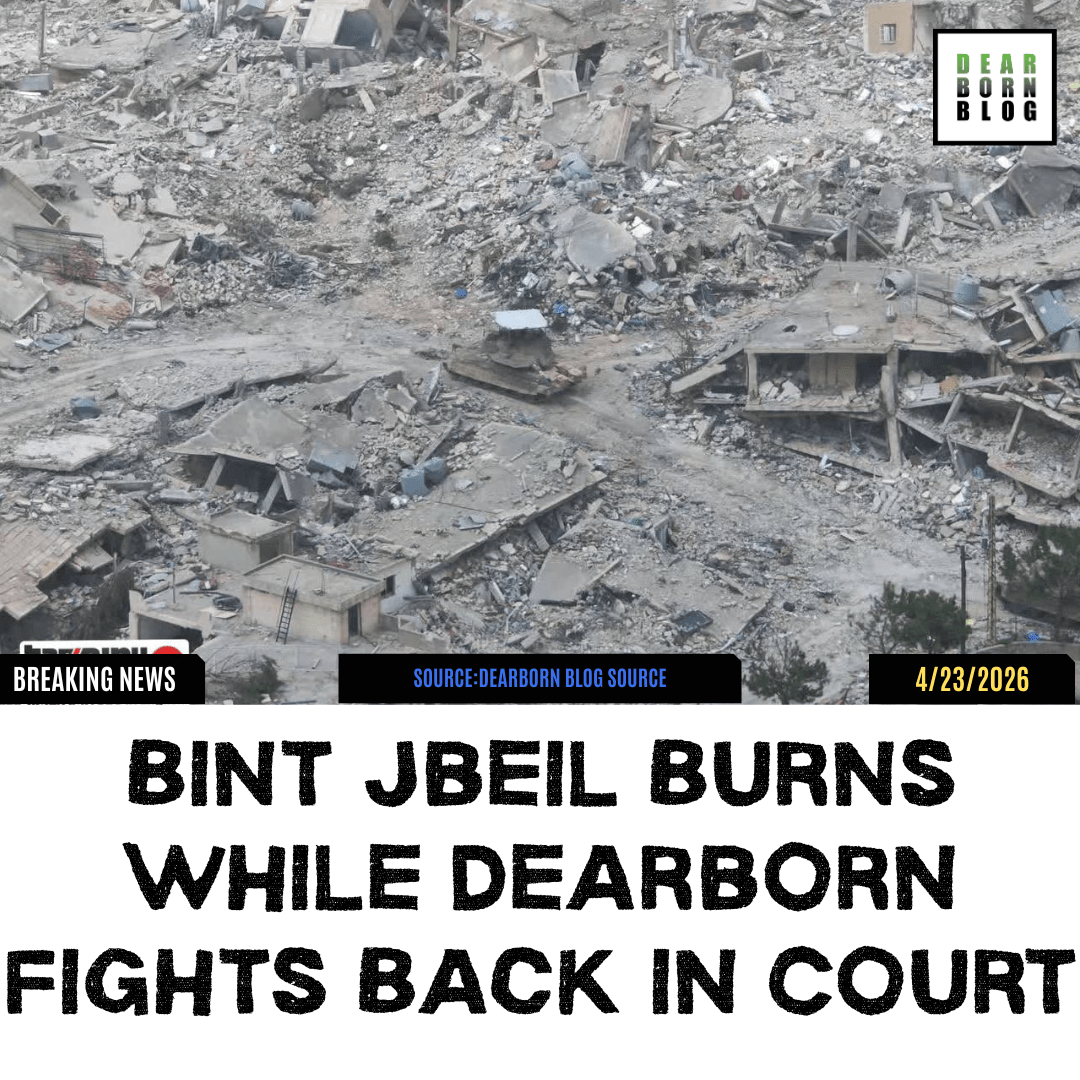
“I Built You Three Times and Could Not Protect You”
Khalil Ajami did not write a news report. He wrote a eulogy — for his home. In a message shared on social media in the final hours of April 2026, Ajami turned to his house in Bint Jbeil the way one speaks to a person they love and have failed:
“Forgive me, my home — I built you three times and could not protect you. My home is not just a pile of stones. My home is my soul, my family, and my memories. My home was a gathering place for loved ones from every direction. I wish you had been sacrificed for Lebanon — all of Lebanon.”— Khalil Ajami, Bint Jbeil resident, April 2026
He opened with a prayer for the heroes and a quiet, bitter acknowledgment of those celebrating elsewhere — a reference to geopolitical maneuvering around the Strait of Hormuz dominating regional headlines even as his city was reduced to rubble. Three times he rebuilt. Three times the bombs came. He ended with a single Arabic word: وجع — pain.
Khalil Ajami’s words are not an isolated lament. They are a dispatch from a city that has been at the center of one of the most devastating military campaigns in Lebanon’s modern history — and a city whose diaspora in Dearborn, Michigan watches in real time as their ancestral homes disappear, block by block, beneath Israeli bulldozers and demolition charges.
Operation Silver Plow: How Bint Jbeil Became a Target
The 2026 assault on Bint Jbeil did not begin as a spontaneous military response. The battle began on April 9, 2026, coinciding with the second day of a ceasefire between the U.S. and Iran, as part of a broader Israeli offensive against Hezbollah that included the April 8 Lebanon attacks. It was part of a wider operation announced by Israeli Defense Minister Israel Katz called “Operation Silver Plow.” The timing was disputed from the start: Iran, Pakistan, and Hezbollah stated that the ceasefire extended to Lebanon and characterized Israeli operations as violations of the agreement, while Israel and the United States maintained that the ceasefire did not apply to the Lebanese front.
The Israeli army announced it had completed the encirclement of Bint Jbeil and began an assault on it, with forces claiming to have killed more than 100 Hezbollah fighters in air strikes and ground confrontations over the course of a week. The town, located just five kilometers from the Israeli border, was declared by Israeli Prime Minister Benjamin Netanyahu a “key strategic target.” Bint Jbeil is regarded by Lebanese military analysts as one of the most symbolically and strategically significant locations in southern Lebanon, commanding viewpoints over the Marjeyoun Plain and providing proximity to contested areas like Shebaa Farms.
■ By The Numbers: The Human Cost in Lebanon
• 2,300+ people killed in Lebanon since the conflict escalated on March 2, 2026, including at least 177 children [2]
• 1.2 million+ Lebanese civilians displaced from their homes [2]
• Five IDF brigades remain deployed inside southern Lebanon despite a declared ceasefire [15]
• Demolitions reported in Bint Jbeil, Khiam, Markaba, Taybeh, Mais al-Jabal, Deir Seryan, and Kunin simultaneously [9]
Homes Demolished During a Ceasefire: A Pattern of Erasure
A ceasefire brokered by the United States went into effect on April 17, 2026. It lasted less than forty-eight hours before demolitions resumed. Lebanon’s state-run National News Agency reported that Israeli forces were repeating house demolition operations in Bint Jbeil even after the truce took hold, with demolitions also reported across other border towns where Israeli troops remain present.
Despite no active military initiative during the ceasefire, Israeli tanks continued to patrol the streets of Bint Jbeil while Israeli forces demolished various buildings including civilian houses. The move has been described officially as a way to “clear” the area. Israeli Defense Minister Israel Katz issued a statement making the policy explicit: he and Prime Minister Netanyahu had instructed the army to act with full force, both on the ground and from the air, including during the ceasefire, in order to protect soldiers from any threat — and to remove houses in border villages that allegedly served as Hezbollah outposts.
Lebanese Defence Minister Michel Menassa condemned the demolitions as evidence of an intention to forcibly displace hundreds of thousands of citizens and systematically destroy villages. According to Haaretz, the Israeli army has been carrying out widespread and systematic demolition of residential buildings and civilian structures, with demolitions reported simultaneously in Bint Jbeil, Khiam, Markaba, and Taybeh while intensive low-altitude drone flights continue across the south despite the ceasefire being in effect.
“The Israeli enemy is still destroying what remains of houses in Bint Jbeil.”— Lebanon’s National News Agency (NNA), April 20, 2026 [4]
It was in Bint Jbeil that former Hezbollah leader Hassan Nasrallah delivered his widely publicized “Liberation” speech in 2000 following Israel’s withdrawal from southern Lebanon after more than two decades of occupation. The city has been rebuilt multiple times by its residents and diaspora — people like Khalil Ajami, who poured their savings and labor into constructing a home three separate times. What Israeli forces are doing now is not simply a military operation. Drone footage captured after Operation Roaring Lion shows the scale of damage and destruction across Bint Jbeil. It is, as one American Lebanese attorney put it bluntly: erasure.
■ The Legal Principle: What the Leahy Law Requires
The Leahy Laws — U.S. federal statutes enacted in the 1990s — prohibit the Department of State and Department of Defense from providing military assistance to foreign security force units credibly implicated in gross human rights violations. [13]
Qualifying violations include: extrajudicial killings, torture, enforced disappearances, and rape. The law does not include exceptions for allied nations. [12]
The ACRL argues that the systematic demolition of civilian homes — including those belonging to American citizens — during an active ceasefire constitutes exactly such a credible violation, making continued U.S. weapons transfers unlawful. [1]
Dearborn’s Lawyers Take Washington to Court
While bombs fell on Bint Jbeil and families grieved from Dearborn, Michigan’s Arab American Civil Rights League announced it would fight back in federal court. The ACRL unveiled a class-action lawsuit on behalf of American citizens who have been directly impacted by Israeli airstrikes and demolitions in Lebanon, targeting not only the U.S. government but also Secretary of State Marco Rubio and U.S. weapons manufacturers.
ACRL Chairman Nasser Beydoun framed the lawsuit in stark terms of equal justice: “This is a demand that the law be applied equally, a demand that our government uphold its duties to its citizens, and a demand that those who have suffered are finally seen and heard and made whole.”
ACRL Founder Nabih Ayad — a Detroit-area attorney with decades of civil rights litigation experience — was equally direct about the weapons manufacturers: “They knew that their weapons are going to be used to destroy innocent people’s homes, not military action, but yet they keep supplying these individuals.” Ayad argued that case law supports holding the U.S. government accountable for using tax dollars to support the eventual destruction of Americans’ homes in Lebanon, stating the ACRL intends to establish a hotline to document claims from anyone impacted.
One of the most powerful voices at the press conference came from Zeina Djurovski, an attorney and ACRL board member whose own family lost their home: “Our home was gone. A bomb was dropped on it. It was reduced to rubble. My grandfather’s home. My grandfather on both sides.” In an echo of Khalil Ajami’s elegy written in Arabic from the other side of the world, Djurovski told reporters: “This is erasure. This is unacceptable for us to have our tax dollars being used in this way. It is heartbreaking, disgusting, and it needs to end.”
“The United States has always stood on principle that it protects its citizens no matter where they are in the world. That principle cannot be selective, cannot depend on politics, and cannot stop when American citizens are harmed by actions of a so-called ally.”— Nasser Beydoun, ACRL Chairman, April 2026 [1]
A Green Party Lens: When U.S. Law and U.S. Weapons Collide
The ACRL lawsuit cuts to the heart of a contradiction that the Green Party has long named and that the two dominant parties have long avoided: the United States cannot simultaneously claim to uphold international law and human rights norms while serving as the primary weapons supplier to a military operation demolishing civilian neighborhoods during declared ceasefires.
The DAWN Leahy Law Accountability Project has mounted a sustained legal and advocacy campaign challenging continued U.S. assistance to Israeli military units credibly implicated in gross human rights violations, arguing the State Department has systematically failed to enforce its own statutes. The ACRL’s new lawsuit adds a specifically American injury to that argument: not just Palestinian or Lebanese civilians, but U.S. citizens whose property — whose ancestral homes rebuilt three times over — have been systematically erased with American-made weapons funded by American taxpayers.
The Green Party platform calls for an immediate end to military aid to Israel, full enforcement of the Leahy Laws, and a foreign policy grounded in nonintervention and international law. Every element of that platform is now reflected in the legal argument the ACRL is bringing before a federal judge. This is not fringe politics. It is the law of the land, being invoked by American attorneys in a federal courthouse.
■ What You Can Do
• Document your claim: If your family has lost property in Lebanon, contact the ACRL to register as a potential plaintiff in the class-action lawsuit.
• Support BintJbeil.org: The Bint Jbeil Benevolent Association coordinates humanitarian and reconstruction support for families from the region.
• Contact your representatives: Demand enforcement of the Leahy Laws and an immediate halt to weapons transfers to forces conducting civilian demolitions.
• Amplify Arab American voices: Share community testimonials. Khalil Ajami’s words — written in heartbreak in Arabic — deserve to be heard in English, in Congress, and in court.
The Voice of Dearborn: “My Home Is Not Just a Pile of Stones”
Dearborn is home to the largest Arab American community in the United States, and within that community, Bint Jbeil holds a singular place. Thousands of Dearborn families trace their roots to this city in southern Lebanon — its streets, its Friday markets, its layered stone homes with their red-tiled roofs looking out over the Galilee. The Bint Jbeil Benevolent Association has long been a pillar of civic life here, connecting the diaspora to the homeland across generations of migration and war.
When Khalil Ajami wrote “my home is my soul, my family, and my memories” — he was writing for every family in Dearborn who ever sent a wire transfer to repair a roof, every parent who promised their children they would visit “back home” someday, every elder who kept a key to a house that may no longer exist. His grief is Dearborn’s grief. His anger is Dearborn’s anger. And the lawsuit filed by the ACRL — a Dearborn-based organization led by lawyers from this community — is Dearborn’s answer.
The community will not be silent. It will not be erased by proxy. It will not watch its homeland demolished with its own tax dollars and say nothing. It will go to court. It will organize. It will document every home, every name, every family. And it will demand that the law — American law — mean what it says.
“We still believe in this country. America comes first in our nation as we understand it. We are going after you. Get ready.”— Nabih Ayad, ACRL Founder, April 2026 [24]
Bint Jbeil has been rebuilt before. In 2006, after Israeli forces devastated the city, the community — in Lebanon and in Dearborn — put it back together stone by stone. Khalil Ajami built his home three times. The spirit that moves people to rebuild three times does not break on the fourth demolition. It organizes. It litigates. It demands justice.
Dearborn is watching. Dearborn is grieving. And Dearborn is fighting back.
Sources
- CBS Detroit / Veronica Ortega. “Arab American Civil Rights League Plans to Sue U.S. Government over Lebanon Airstrikes.” CBS News Detroit, April 20, 2026. https://www.cbsnews.com/detroit/news/arab-american-civil-rights-league-sue-u-s-government-lebanon-airstrikes/ ↩
- Dawn.com / AFP. “Lebanon Restores Lifelines as Israel Extends Demolition.” Dawn, April 20, 2026. https://www.dawn.com/news/1993375/lebanon-restores-lifelines-as-israel-extends-demolition ↩
- Naharnet. “Israeli Army Carries Out Demolitions in Bint Jbeil, Other Towns.” Naharnet, April 19, 2026. https://www.naharnet.com/stories/en/319641-israeli-army-carries-out-demolitions-in-bint-jbeil-other-towns ↩
- Sahara Reporters. “Israeli Military Destroys Several Homes in Southern Lebanon Town Despite Ceasefire.” Sahara Reporters, April 18, 2026. https://saharareporters.com/2026/04/18/israeli-military-destroys-several-homes-southern-lebanon-town-despite-ceasefire ↩
- Wikipedia. “Battle of Bint Jbeil (2026).” Wikipedia, last updated April 21, 2026. https://en.wikipedia.org/wiki/Battle_of_Bint_Jbeil_(2026) ↩
- Jamaica Observer / AFP. “Israel Vows to Level Homes in Lebanon, Counter Threats with ‘Full Force’.” Jamaica Observer, April 19, 2026. https://www.jamaicaobserver.com/2026/04/19/israel-vows-level-homes-lebanon-counter-threats-full-force/ ↩
- Al Jazeera. “At Least Six Killed in Israeli Strikes in Southern Lebanon.” Al Jazeera, April 13, 2026. https://www.aljazeera.com/news/2026/4/13/at-least-six-killed-in-israeli-strikes-in-southern-lebanon ↩
- The National. “Bint Jbeil and Khiam: Israel and Hezbollah Locked in Battle for ‘Highly Symbolic’ Yet Strategic Towns.” The National, April 16, 2026. https://www.thenationalnews.com/news/mena/2026/04/16/bint-jbeil-and-khiam-israel-and-hezbollah-locked-in-battle-for-highly-symbolic-yet-strategic-towns/ ↩
- On a Quiet Day. “Israeli Artillery Shelling Violates Ceasefire in Southern Lebanon.” OnAQuietDay.org, April 20, 2026. https://onaquietday.org/2026/04/20/israeli-artillery-shelling-violates-ceasefire-in-southern-lebanon/ ↩
- NBC News. “Video Shows Destruction in Southern Lebanon After IDF Operation.” NBC News, April 20, 2026. https://www.nbcnews.com/video/video-shows-destruction-in-southern-lebanon-after-idf-operation-261715525657 ↩
- TV20 Detroit. “Dearborn Group Plans Federal Lawsuit over Destroyed Homes in Lebanon.” TV20 Detroit, April 2026. https://www.tv20detroit.com/news/region/wayne-county/dearborn-civil-rights-group-plans-federal-lawsuit-over-lebanese-american-homes-destroyed-by-airstrikes ↩
- DAWN MENA. “Leahy Law Accountability Project.” Democracy for the Arab World Now, February 2026. https://dawnmena.org/leahy-law-accountability-project/ ↩
- Wikipedia. “Leahy Law.” Wikipedia. https://en.wikipedia.org/wiki/Leahy_Law ↩
- Arab American Civil Rights League. “ACRL Board — Nabih Ayad.” ACRL, acrlmich.org. https://acrlmich.org/board/ ↩
- Swisher Post. “Israel Orders Full Military Force in Lebanon Despite Fragile Ceasefire as Border Villages Are Demolished.” Swisher Post, April 19, 2026. https://www.swisherpost.com/news/israel-lebanon-full-force-ceasefire-april-2026/ ↩
⚠ Legal Disclaimer
The content published on Dearborn Blog is intended for informational, educational, and community journalism purposes only. The views expressed in this article reflect the editorial perspective of Dearborn Blog and do not constitute legal advice. Translations of Arabic-language source material are rendered to the best of the author’s ability and are provided for informational context. All statements attributed to named individuals have been sourced from publicly available press conferences, news reports, and published statements; Dearborn Blog makes no independent claims as to their accuracy beyond those sources. Dearborn Blog does not represent or endorse any political party, legal organization, or advocacy group referenced herein, though editorial commentary may reflect agreement with certain policy positions. Readers are encouraged to consult primary sources and legal counsel for guidance specific to their circumstances. Dearborn Blog assumes no liability for any action taken in reliance on the content of this article.


